Muscle & Fat Loss
On a GLP-1? How to Keep Your Muscle While You Lose Fat
A meaningful share of GLP-1 weight loss is muscle. Here is why that matters for men, and the training and protein habits that keep it on your frame.
GLP-1 medications like semaglutide and tirzepatide work. They quiet your appetite, and the weight comes off faster than most men have ever seen. But there is a catch that does not make the ads. Not all of the weight you lose is fat. A real share of it is muscle.
This is not a reason to panic, and it is not a reason to stop your medication. It is a reason to train and eat like you mean it while the weight comes off. This is education, not medical advice. Any decision about your medication belongs with your prescriber.
A chunk of the weight is muscle, not just fat
Start with the good news. These drugs produce serious weight loss. In the STEP 1 trial, adults on semaglutide lost about 15 percent of their body weight over 68 weeks (Wilding, 2021). Tirzepatide can push even higher.
Now the part that matters here. When researchers scanned people's bodies during these trials, they found that a meaningful piece of the loss was lean mass, the category that includes your muscle. In a body composition substudy of the SURMOUNT-1 tirzepatide trial, people lost about 21 percent of their body weight. Roughly 75 percent of that was fat, and about 25 percent was lean mass (Look, 2025).
That one in four ratio keeps showing up. A 2026 review in Annals of Internal Medicine looked across dozens of studies and found that a median of about 28 percent of the weight lost on these drugs came from muscle related tissue (Batsis, 2026). Another 2026 analysis of 20 trials put lean mass at 25 to 39 percent of the weight lost, around 35 percent for semaglutide and 25 percent for tirzepatide (Eisa, 2026).
Here is the honest footnote. Losing some lean mass is normal any time you drop weight, drug or no drug. When you carry less fat, you need a little less muscle to haul it around. The concern with GLP-1 drugs is the speed and size of the loss, and the fact that many people are not lifting or eating enough protein to fight back.
Why muscle matters for men
Muscle is not just for the mirror. It is function, and function is what keeps you in the game as you age.
Strength tracks with how long you live. In a study of about 500,000 adults, people with a weaker grip, a simple stand in for whole body strength, had a higher risk of dying in the years that followed (Celis-Morales, 2018). That is an association, not proof that lifting adds decades. But it lines up with common sense. Strong men carry the groceries, climb the stairs, catch themselves when they trip, and stay independent longer.
Muscle also runs your metabolism. It is the main place your body stores the sugar from your meals, and it burns calories around the clock. Lose a lot of it and your engine idles lower, which can make weight easier to regain down the road.
That regain risk is the quiet danger. One review estimated that people on these drugs lose roughly 10 percent of their lean mass, about 6 kg for many, and compared that to a decade or more of normal aging (Locatelli, 2024). If you later come off the drug and the weight creeps back as fat, you can end up softer and weaker than when you started. Protecting muscle now is how you avoid that trap.
How to keep your muscle
You cannot control how the drug works. You can control the two levers with the most evidence behind them. Lift, and eat enough protein.
Lift weights, and lift with intent
Resistance training is the single strongest signal you can send your body to hold on to muscle. Your muscles keep what you force them to use.
The numbers back it up. Structured resistance training lasting more than 10 weeks has been shown to add around 3 kg of lean mass and raise strength by about 25 percent (Locatelli, 2024). And when people added resistance training to a weight loss program, the share of weight lost as muscle dropped to about 17 to 18 percent, the best result of any approach reviewed (Eisa, 2026).
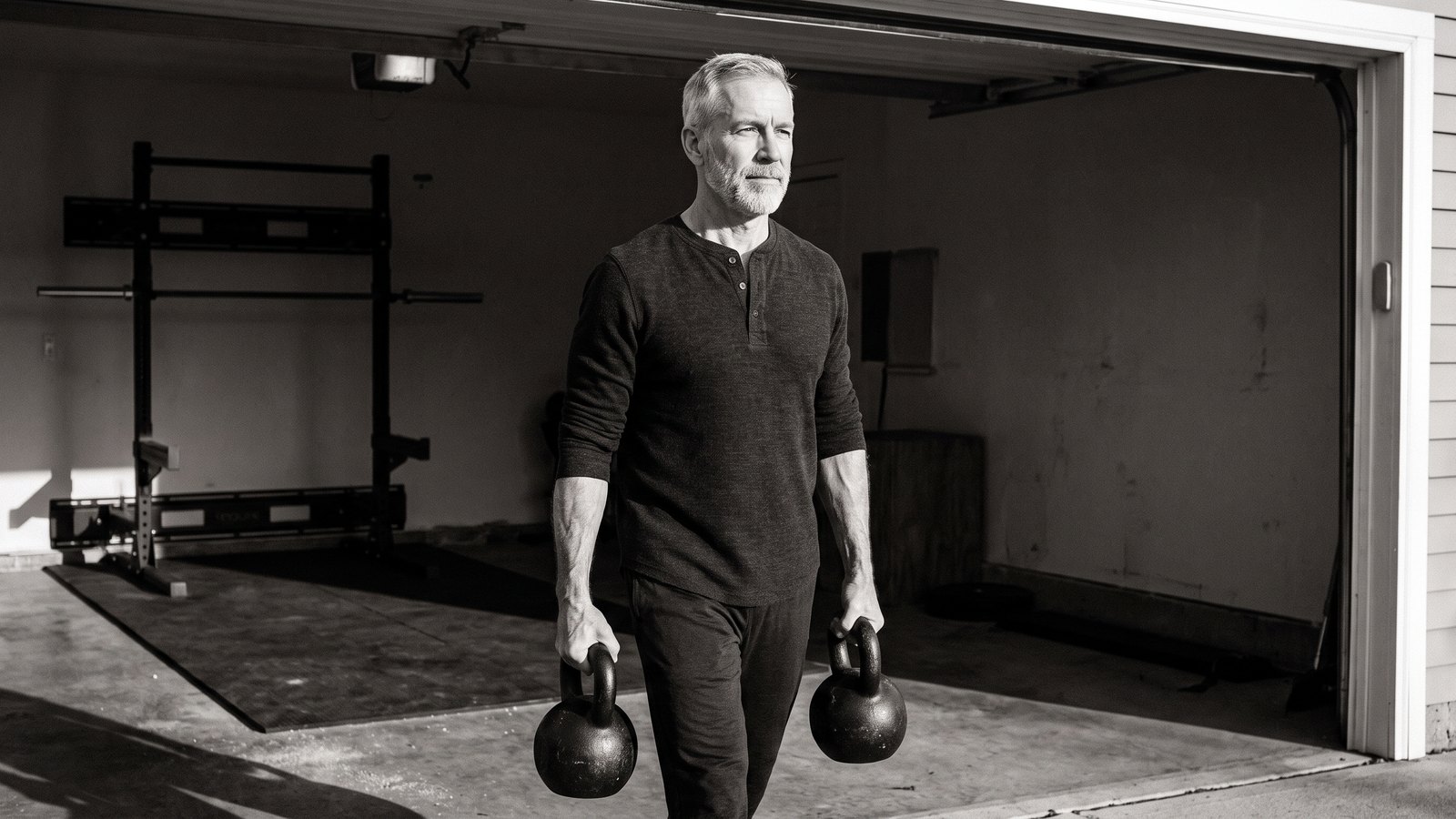
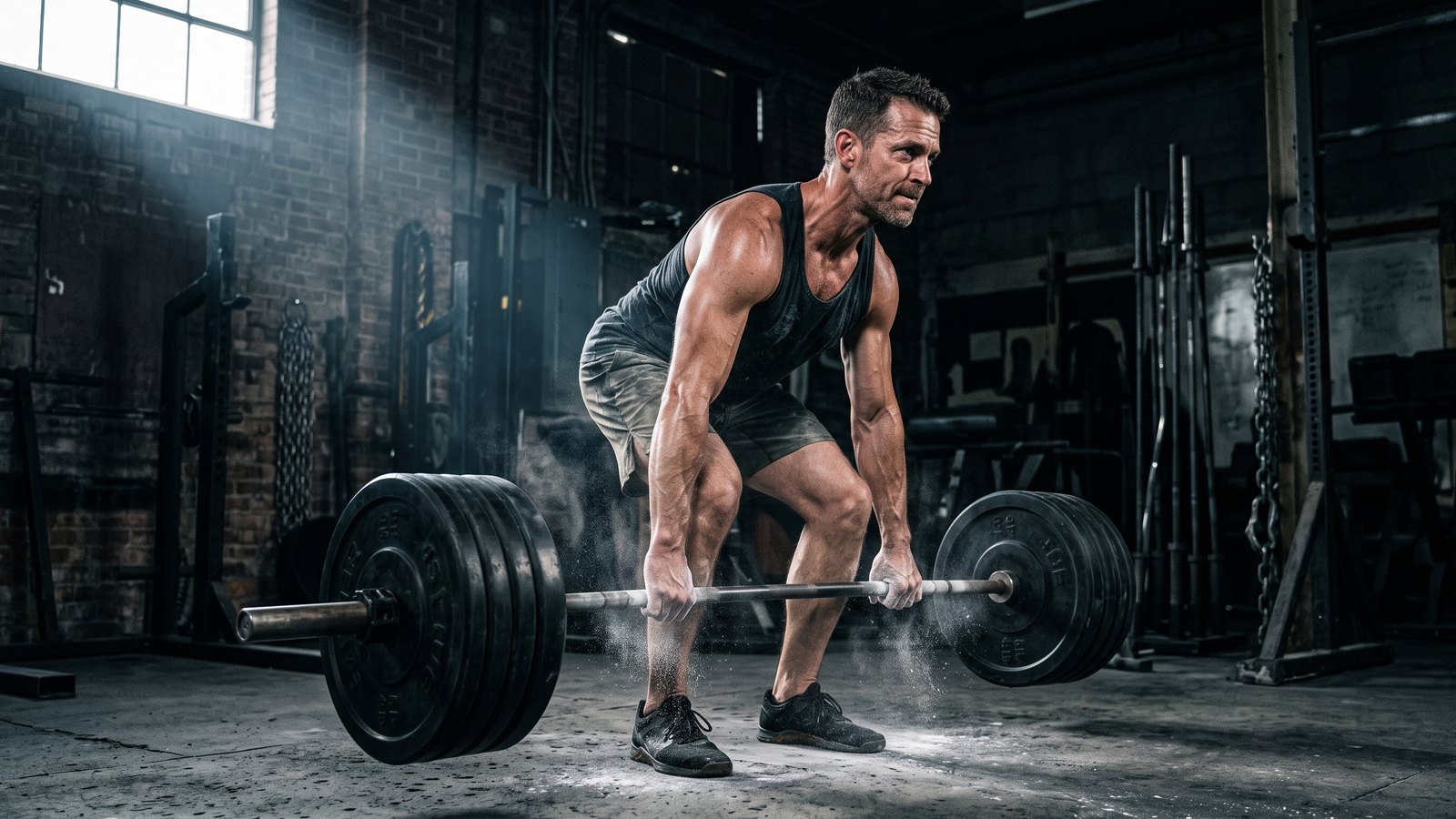
You do not need to live in the gym. Two to four sessions a week, built around compound moves like squats, presses, rows, and deadlifts or their machine versions, covers most of it. Add a little weight or a rep over time. That slow progression is the part that works. Cardio is good for your heart and your head, but it does not tell your body to keep muscle the way lifting does. If you only have time for one, lift.
Eat enough protein
Protein is the raw material your muscle is built from, and it is the nutrient most often shortchanged when a drug kills your appetite.
Reviews of protein and weight loss point to roughly 1.2 to 1.6 g of protein per kg of body weight per day, with about 25 to 30 g at each meal, to help hold on to lean mass while the fat comes off (Leidy, 2015). For many men that lands somewhere around 100 to 150 g a day, though the right number depends on your size, and your prescriber or a dietitian can help you set it.
Protein does more than supply parts. In one trial, young men ate in a steep calorie deficit while training hard six days a week. The group eating more protein, about 2.4 g per kg, actually gained a little lean mass and lost more fat than the group eating half as much (Longland, 2016). Training plus protein did not just slow the bleeding. It flipped the result, the same recipe behind body recomposition after 40.
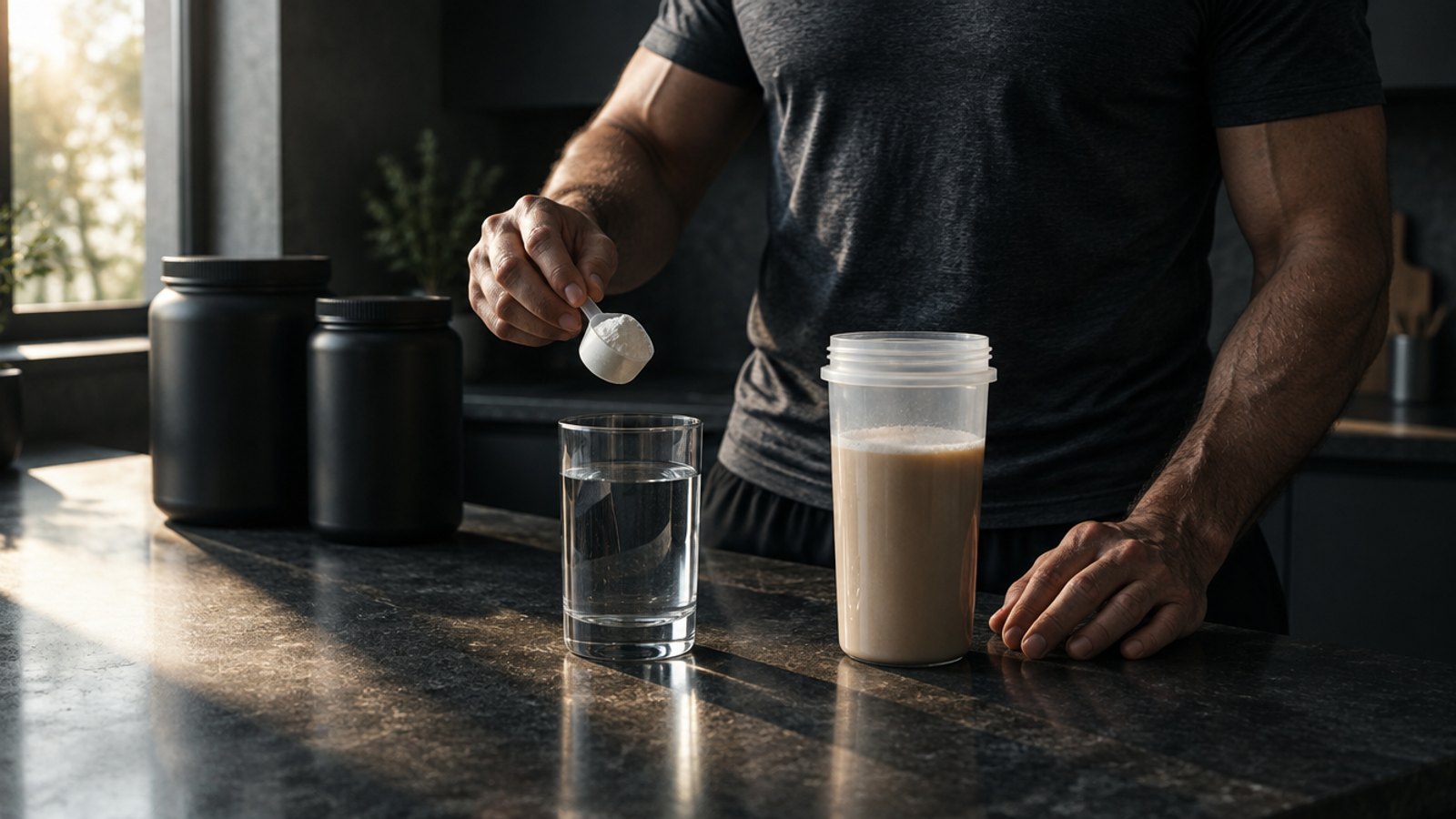
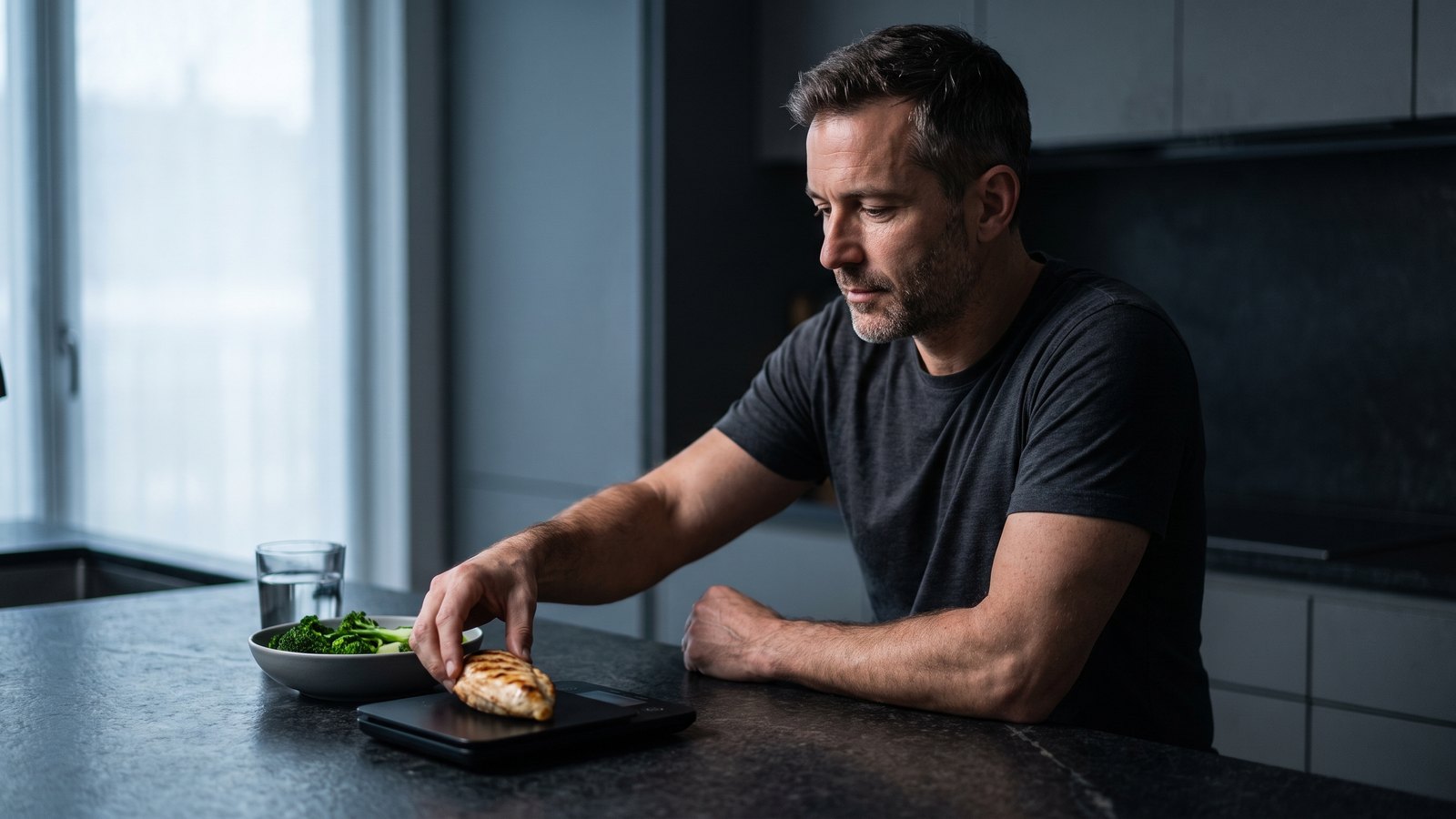
The practical problem on a GLP-1 is that you are not hungry, so protein slips. Make it the first thing on your plate. Lean meat, fish, eggs, dairy, and a shake when whole food feels like too much. Hit your protein first, then eat the rest if you still have room.
Do not undereat everything else
Appetite suppression is the point of the drug, but it has a downside. Some people eat so little that the weight comes off dangerously fast and drags extra muscle with it. A very aggressive deficit costs you more lean mass than a moderate one. Enough total food, enough protein, and a steady pace beat crash losing every time. If you are barely eating at all, that is worth flagging to your prescriber.
The verdict
The medication handles your appetite, a job your own gut hormones also do at a much gentler natural level. It does not build or protect your muscle. That part is on you, and the tools are simple. Lift a few times a week and push the load up over time. Eat protein on purpose, even when you are not hungry. Do not starve yourself just because the drug lets you.
Do that, and more of what you lose is fat, and more of what you keep is the muscle that carries you into your fifties, sixties, and beyond. The drug is a tool. Your training and your fork decide what kind of body is left when the weight is gone. And to be clear one more time: none of this is a reason to start, stop, or change a medication on your own. That is a conversation with your doctor. For the training side, our muscle and fat-loss guides go deeper.
References
- Wilding JPH, et al. Once-Weekly Semaglutide in Adults with Overweight or Obesity. N Engl J Med. 2021. https://pubmed.ncbi.nlm.nih.gov/33567185/
- Look M, et al. Body composition changes during weight reduction with tirzepatide in the SURMOUNT-1 study of adults with obesity or overweight. Diabetes Obes Metab. 2025. https://pubmed.ncbi.nlm.nih.gov/39996356/
- Batsis JA, et al. Effect of Incretin-Based and Nonpharmacologic Weight Loss on Body Composition: A Systematic Review. Ann Intern Med. 2026. https://pubmed.ncbi.nlm.nih.gov/41996180/
- Eisa N, Barood O. Lean Mass Changes With Incretin Therapy Versus Lifestyle Intervention: A Systematic Review and Meta-Analysis of Randomised Controlled Trials. Diabetes Obes Metab. 2026. https://pubmed.ncbi.nlm.nih.gov/41877354/
- Celis-Morales CA, et al. Associations of grip strength with cardiovascular, respiratory, and cancer outcomes and all cause mortality: prospective cohort study of half a million UK Biobank participants. BMJ. 2018. https://pubmed.ncbi.nlm.nih.gov/29739772/
- Locatelli JC, et al. Incretin-Based Weight Loss Pharmacotherapy: Can Resistance Exercise Optimize Changes in Body Composition? Diabetes Care. 2024. https://pubmed.ncbi.nlm.nih.gov/38687506/
- Longland TM, et al. Higher compared with lower dietary protein during an energy deficit combined with intense exercise promotes greater lean mass gain and fat mass loss: a randomized trial. Am J Clin Nutr. 2016. https://pubmed.ncbi.nlm.nih.gov/26817506/
- Leidy HJ, et al. The role of protein in weight loss and maintenance. Am J Clin Nutr. 2015. https://pubmed.ncbi.nlm.nih.gov/25926512/
Common questions
Do GLP-1 drugs actually make you lose muscle?
GLP-1 drugs do make you lose some muscle. It is more accurate to say fast weight loss costs muscle, and these drugs cause fast weight loss. Body scans from the tirzepatide SURMOUNT-1 trial showed about 25 percent of the weight people lost was lean mass, which includes muscle (Look, 2025). Reviews across many trials land in a similar range. The loss is not a flaw you are stuck with. Resistance training and enough protein change the ratio in your favor.
How much protein should I eat on a GLP-1?
Research on people losing weight points to about 1.2 to 1.6 g of protein per kg of body weight per day, spread across meals at roughly 25 to 30 g each (Leidy, 2015). For many men that is somewhere near 100 to 150 g a day. The hard part on these drugs is appetite: you are not hungry, so protein is easy to miss. Eat it first at every meal, lean on easy sources like eggs, dairy, fish, and shakes, and let your prescriber or a dietitian fine tune the number for your body.
Is cardio or lifting better for keeping muscle?
Lifting is better than cardio for keeping muscle, by a wide margin. Cardio is great for your heart and mood, but resistance training is the signal that tells your body to hold on to muscle. In reviews, adding resistance training to a weight loss plan gave the best muscle sparing result of any approach (Eisa, 2026). Do cardio if you enjoy it, but do not let it replace lifting.
Will I get the muscle back if I lose it?
You can rebuild muscle with training and protein, but it is far easier to keep it than to regrow it, especially as you get older. That is why the smart move is to protect muscle while you lose the weight, not to lose it now and chase it later. If you have already dropped a lot of weight without lifting, start now. It is never too late to send that signal.