Supplements
Best Creatine Supplement for Men: Which Form Actually Wins
Monohydrate, HCl, buffered, ethyl ester, gummies. The ranked lists all crown a different bottle, so here is the comparison on stated criteria, with the trials that settled it.
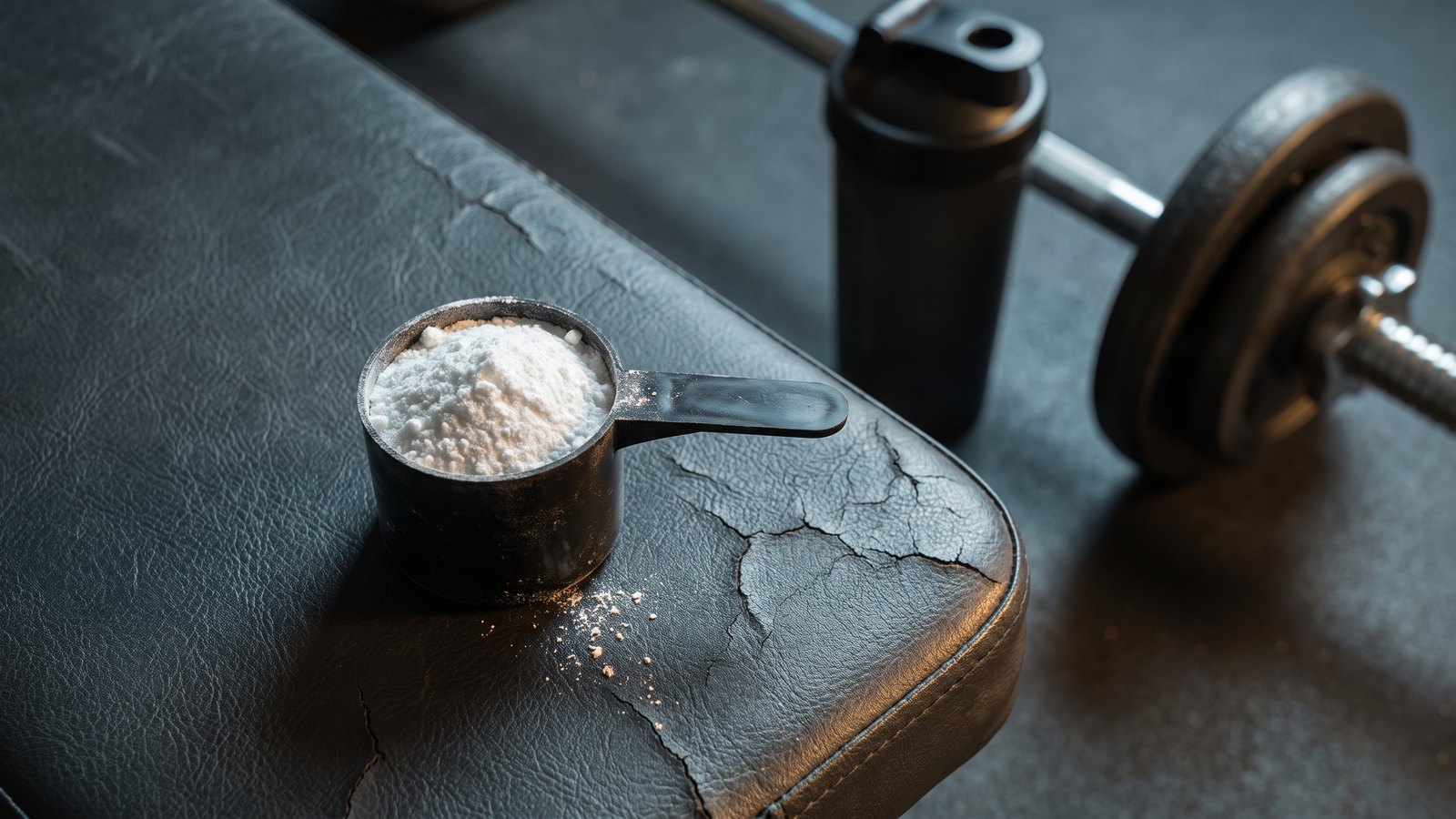
Search "best creatine supplement for men" and you get a wall of ranked lists, each one crowning a different bottle. Half of them are ranking whichever brand pays the best commission. The other half are ranking flavors.
Here is the verdict up front. The best creatine supplement for men is plain creatine monohydrate, 3 to 5 grams a day, from a brand that will show you a third-party test. Every fancier form on the shelf has now been put head to head with monohydrate in a human trial, and none of them won. What you are actually choosing between is price and proof, not chemistry.
This post is about picking the product. If you want the case for taking it at all, what creatine actually does in a man's body covers the mechanism and the strength data, and the brain, bone and fatigue research beyond the weight room covers the rest. This is education, not medical advice.
What actually separates one creatine from another
Six things, and only six. Judge every product on this list and the shelf gets a lot smaller.
- Form. Monohydrate, hydrochloride, buffered, ethyl ester, nitrate. This is where the marketing lives.
- Dose per serving, printed on the label. If you have to do math to find out how many grams you get, that is a signal.
- Third-party testing. NSF Certified for Sport or Informed Sport means somebody outside the company opened the tub.
- Cost per 5 grams. The only price number that matters.
- Mixability. Micronized powder dissolves better. It does not work better.
- What else is in it. Every added ingredient is something you are paying for and may not need.
Notice what is not on that list: proprietary blends, "advanced absorption technology," and the word clinical used without a citation.
Creatine monohydrate: the default, and why
Monohydrate is the form used in the overwhelming majority of creatine research. The International Society of Sports Nutrition reviewed that body of work and concluded that creatine monohydrate is the most effective form for increasing muscle creatine stores and exercise capacity, and that short and long-term supplementation, up to 30 g a day for five years, is safe and well tolerated in healthy people from infants to the elderly (Kreider et al., 2017).
That is an unusual sentence in supplements. Most ingredients get a handful of small trials and a lot of enthusiasm. Creatine monohydrate has hundreds of published human studies and a decades-long safety record at doses far above what anyone actually takes.
It is also the cheapest form on the shelf, which is the part the fancier products need you not to notice.
Creatine HCl vs monohydrate: better solubility, same results
Creatine hydrochloride is the most common upsell. The pitch is real as far as it goes: HCl dissolves far more readily in water, so it mixes clear instead of gritty, and the claim that follows is that better solubility means better absorption, which means you need less.
Somebody finally tested it properly. Forty men aged 18 to 25 were randomized to eight weeks of resistance training plus one of four conditions: creatine HCl at 0.03 g per kg, monohydrate with a five-day loading phase, monohydrate without loading at the same 0.03 g per kg, or placebo. The researchers measured one-rep max strength, skeletal muscle mass, muscle cross-sectional area, body fat, and a full hormone panel.
All three creatine groups beat placebo on strength, muscle mass, cross-sectional area and body fat. The comparison that matters is between them, and there the paper is blunt: HCl showed no benefit over monohydrate (Eghbali et al., 2024). Same gram-for-gram dose, same outcome.
That is one 40-man trial, so hold it loosely. But it is the trial the HCl marketing has been waiting on for a decade, and it came back neutral. Solubility is a texture feature. If you hate the grit and want to pay two to three times as much for a smoother drink, that is a legitimate thing to buy. It is not a performance upgrade.
Buffered creatine (Kre-Alkalyn): tested, and it lost
Buffered creatine is sold on the claim that a higher pH stops creatine from degrading in the stomach, so a much smaller dose does the same job.
Thirty-six resistance-trained people were randomized for 28 days to monohydrate at standard loading and maintenance doses, buffered creatine at the manufacturer's recommended 1.5 g a day, or buffered creatine at full monohydrate doses. This was not a survey. They took muscle biopsies from the vastus lateralis.
Muscle free creatine rose across the board, with no significant differences between groups. But the direct pairwise comparison between low-dose buffered creatine and monohydrate tended to favor monohydrate, and the low-dose buffered group's muscle creatine barely moved. There were no group differences in body composition, bench press or leg press one-rep max, or anaerobic power, and no evidence of fewer side effects (Jagim et al., 2012).
The authors' conclusion is worth reading straight: these findings do not support claims that a buffered form is more effective or safer than creatine monohydrate. The 1.5 g dose is the actual problem. You are paying more for less creatine.
Creatine ethyl ester: skip it
Ethyl ester was the previous generation's absorption story, and it is the clearest loss of the group. Thirty untrained men took placebo, monohydrate, or ethyl ester for seven weeks alongside heavy resistance training, with serum and muscle creatine measured directly.
Serum creatine was actually lower in the ethyl ester group than in placebo or monohydrate, and serum creatinine was higher, which is what you would expect from a compound breaking down into a waste product before it gets where it is going. No advantage appeared in body composition, muscle mass, strength or power (Spillane et al., 2009).
You will still find it on shelves. There is no reason to buy it.
Gummies, pills and pre-mixed drinks: the arithmetic problem
These are not different forms of creatine. They are usually monohydrate in a different package, and the issue is dose and money rather than chemistry.
Run the numbers before you buy. A gummy typically carries a fraction of a gram to about 1.5 g, so hitting 5 g means eating a handful every day and paying several times the powder price for the sugar and the packaging. Capsules are cleaner but usually run 750 mg to 1 g each, which is five or more pills a day. Pre-mixed ready-to-drink creatine has the added problem that creatine in solution degrades over time, which is exactly why it is sold as a powder in the first place.
If capsules are the difference between taking it every day and not taking it at all, take the capsules. Consistency beats optimization here by a wide margin. Just know what the convenience costs.
Creapure vs generic monohydrate: is the label worth it?
Creapure is a specific German-manufactured creatine monohydrate, and it is what a lot of the research-grade product in published trials has been. Buying it means you know exactly which factory the powder came from.
Is generic monohydrate worse? Usually not. But creatine is a commodity ingredient sourced from many suppliers, and dietary supplements in the United States are not pre-approved for content or purity before they are sold. That is not a creatine problem, it is a supplement-industry problem, and it is the reason third-party testing is the line on the label actually worth paying for.
Practical rule: either buy Creapure, or buy a product carrying NSF Certified for Sport or Informed Sport. Either one gets you an outside party verifying what is in the tub. Paying for both is fine and paying for neither is a gamble on a $20 purchase.
Should men over 50 take creatine?
This is where creatine stops being a gym supplement and starts being a healthspan one, and the evidence in older men is stronger than most people realize.
A meta-analysis of 22 randomized controlled trials in 721 participants, mean ages 57 to 70, compared creatine plus resistance training against resistance training alone for 7 to 52 weeks. Creatine added 1.37 kg of lean tissue mass over training alone, and improved both chest press and leg press strength (Chilibeck et al., 2017).
An earlier meta-analysis of 357 older adults found the same pattern and went one step further: the creatine groups also did better on the 30-second chair stand test, a plain measure of getting out of a chair (Devries and Phillips, 2014). That is the outcome that matters at 70.
Two caveats stated honestly. Neither analysis was men-only, and the effect sizes for strength were modest. Creatine is an amplifier on training, not a replacement for it. If you are over 50 and not lifting, the supplement is the wrong place to start, and what resistance training does for all-cause mortality makes the case for fixing that first. If you are lifting and dieting at the same time, the four levers that decide whether you lose fat or muscle after 50 is the wider plan this fits inside.
How much creatine should a man take, and do you need to load?
Three to five grams a day, every day, taken whenever you will actually remember. Bigger men at the top of that range.
Loading is optional, and the study that settled it is nearly thirty years old. In 31 men, six days of 20 g a day raised muscle total creatine by about 20 percent, which could then be held with 2 g a day. Taking 3 g a day from the start, with no loading phase at all, produced the same roughly 20 percent rise over 28 days (Hultman et al., 1996).
Same destination. Loading gets you there in a week instead of a month, at the cost of taking four scoops a day and a higher chance of stomach upset. If you have a competition in ten days, load. Otherwise do not bother.
One more thing worth knowing: when you stop, muscle creatine drifts back to baseline over about 30 days. It does not crash, and there is no withdrawal. You just stop having the benefit.
Creatine also pulls water into muscle, which is why the scale can jump two to four pounds in the first couple of weeks. That is intramuscular water, not fat, and it is not bloat under the skin. If you are tracking body composition through a fat-loss phase, expect it and do not let it derail you.
Is creatine safe?
In healthy people, the safety record is about as good as it gets in this category. The ISSN position stand covers supplementation up to 30 g a day for five years across populations ranging from infants to the elderly and reports it as safe and well tolerated (Kreider et al., 2017).
The kidney worry comes from a real observation misread. Creatine raises serum creatinine, which is the marker doctors use to estimate kidney function, so a routine blood panel can look off. In the buffered-creatine trial, creatinine rose in every creatine group but stayed within the normal range for active people (Jagim et al., 2012). Tell your doctor you take creatine before your bloodwork, not after.
If you have existing kidney disease, or you are on medication that affects kidney function, this is a conversation to have with your prescriber rather than a decision to make from an article.
Three products worth buying
Nobody pays us to say any of this, and there are no affiliate links on this page. These are three specific ways to satisfy the criteria above at three price points. Check the current label yourself, because formulas change.
- Optimum Nutrition Micronized Creatine Monohydrate. Creapure-sourced monohydrate, 5 g per serving, unflavored, no additives, sold nearly everywhere. The straightforward default.
- Thorne Creatine. Monohydrate at 5 g per scoop and NSF Certified for Sport, which is the certification that matters if you are drug tested or simply want somebody outside the company checking the tub. Costs more per serving than the others.
- Nutricost Creatine Monohydrate. Micronized monohydrate, 5 g per serving, usually the lowest cost per serving of the three. Nutricost products are manufactured in a facility that carries third-party GMP registration, which is a weaker signal than per-batch certification but better than nothing.
Any unflavored monohydrate powder at 5 g a serving with a third-party mark does the job. If your current tub already meets that description, you have the right product and there is nothing to switch to.
The verdict
Creatine monohydrate wins, and it is not close. It has the deepest evidence base, the longest safety record, the lowest price, and every alternative form that has been tested head to head against it has come back neutral or worse.
Its honest downsides: it is gritty in cold water, it will add a couple of pounds of intramuscular water in the first weeks, and a minority of men get stomach upset on a loading dose. Splitting the dose or dropping the loading phase fixes most of that.
Buy unflavored monohydrate with a third-party mark, take 3 to 5 grams a day, and spend the money you saved on food. And remember what the supplement is actually amplifying: creatine adds a little on top of hard training and enough protein, which is why how much protein it takes to build muscle is the more important thing to get right first. More supplement verdicts here.
References
- Kreider RB, Kalman DS, Antonio J, et al. International Society of Sports Nutrition position stand: safety and efficacy of creatine supplementation in exercise, sport, and medicine. J Int Soc Sports Nutr. 2017. https://pubmed.ncbi.nlm.nih.gov/28615996/
- Eghbali E, Arazi H, Suzuki K. Supplementing with which form of creatine (hydrochloride or monohydrate) alongside resistance training can have more impacts on anabolic/catabolic hormones, strength and body composition? Physiol Res. 2024. https://pubmed.ncbi.nlm.nih.gov/39545789/
- Jagim AR, Oliver JM, Sanchez A, et al. A buffered form of creatine does not promote greater changes in muscle creatine content, body composition, or training adaptations than creatine monohydrate. J Int Soc Sports Nutr. 2012. https://pubmed.ncbi.nlm.nih.gov/22971354/
- Spillane M, Schoch R, Cooke M, et al. The effects of creatine ethyl ester supplementation combined with heavy resistance training on body composition, muscle performance, and serum and muscle creatine levels. J Int Soc Sports Nutr. 2009. https://pubmed.ncbi.nlm.nih.gov/19228401/
- Chilibeck PD, Kaviani M, Candow DG, Zello GA. Effect of creatine supplementation during resistance training on lean tissue mass and muscular strength in older adults: a meta-analysis. Open Access J Sports Med. 2017. https://pubmed.ncbi.nlm.nih.gov/29138605/
- Devries MC, Phillips SM. Creatine supplementation during resistance training in older adults: a meta-analysis. Med Sci Sports Exerc. 2014. https://pubmed.ncbi.nlm.nih.gov/24576864/
- Hultman E, Soderlund K, Timmons JA, Cederblad G, Greenhaff PL. Muscle creatine loading in men. J Appl Physiol. 1996. https://pubmed.ncbi.nlm.nih.gov/8828669/
Common questions
Which creatine is best for men?
Creatine monohydrate is the best creatine for men. It is the form used in the large majority of the research, the International Society of Sports Nutrition names it the most effective form for raising muscle creatine and exercise capacity, and it is the cheapest option on the shelf (Kreider et al., 2017). Buy it unflavored, at 5 g per serving, from a brand carrying NSF Certified for Sport, Informed Sport, or Creapure.
Is creatine HCl better than monohydrate?
Creatine HCl is not better than monohydrate. Creatine HCl dissolves better, which is a texture advantage, not a performance one. In an eight-week randomized trial, 40 men trained on HCl, monohydrate with loading, monohydrate without loading, or placebo. All three creatine groups beat placebo on strength and muscle mass, and HCl showed no benefit over monohydrate at the same dose (Eghbali et al., 2024). It typically costs two to three times more.
How much creatine should a man take a day?
Three to five grams a day, taken consistently, with larger men at the top of that range. The dose does not need to be timed around training. What matters is taking it every day, because muscle creatine builds up over weeks rather than hours.
Do you have to load creatine?
You do not have to load creatine. In 31 men, six days at 20 g a day raised muscle total creatine by about 20 percent, and taking 3 g a day with no loading phase produced the same roughly 20 percent rise over 28 days (Hultman et al., 1996). Loading gets you to the same place in a week instead of a month, with more stomach upset. Skip it unless you have a deadline.
Should men over 50 take creatine?
If you are lifting, the evidence supports it. A meta-analysis of 22 randomized trials in 721 people with mean ages of 57 to 70 found creatine plus resistance training added 1.37 kg of lean tissue mass over training alone, plus greater chest press and leg press strength (Chilibeck et al., 2017). An earlier meta-analysis in 357 older adults also found better performance on the 30-second chair stand test (Devries and Phillips, 2014). Creatine amplifies training. It does not replace it.
Is creatine safe for your kidneys?
In healthy people, the safety record is strong. The ISSN position stand reports supplementation up to 30 g a day for five years as safe and well tolerated across populations from infants to the elderly (Kreider et al., 2017). Creatine does raise serum creatinine, the marker used to estimate kidney function, so tell your doctor you take it before bloodwork. If you have existing kidney disease or take medication affecting kidney function, talk to your prescriber before starting.
Does creatine make you gain water weight?
Creatine pulls water into muscle, so the scale often rises two to four pounds in the first couple of weeks. That is intramuscular water, not fat and not subcutaneous bloat. Expect it during a fat-loss phase and judge progress on the mirror, the tape and your lifts rather than on that first jump.
Are creatine gummies worth it?
Creatine gummies are worth it only if they are the reason you take creatine every day. Gummies are usually just monohydrate in a sugar carrier at a fraction of a gram to about 1.5 g each, so reaching 5 g means several gummies daily at multiple times the powder price. The creatine itself is the same. You are paying for convenience, not effectiveness.