Muscle & Fat Loss
Visceral vs Subcutaneous Fat: Why the Belly Fat You Cannot Pinch Is the One That Matters
The soft fat you can grab is mostly cosmetic. The deep fat wrapped around your organs is the one tied to real risk. Here is how to tell them apart and what actually moves it.
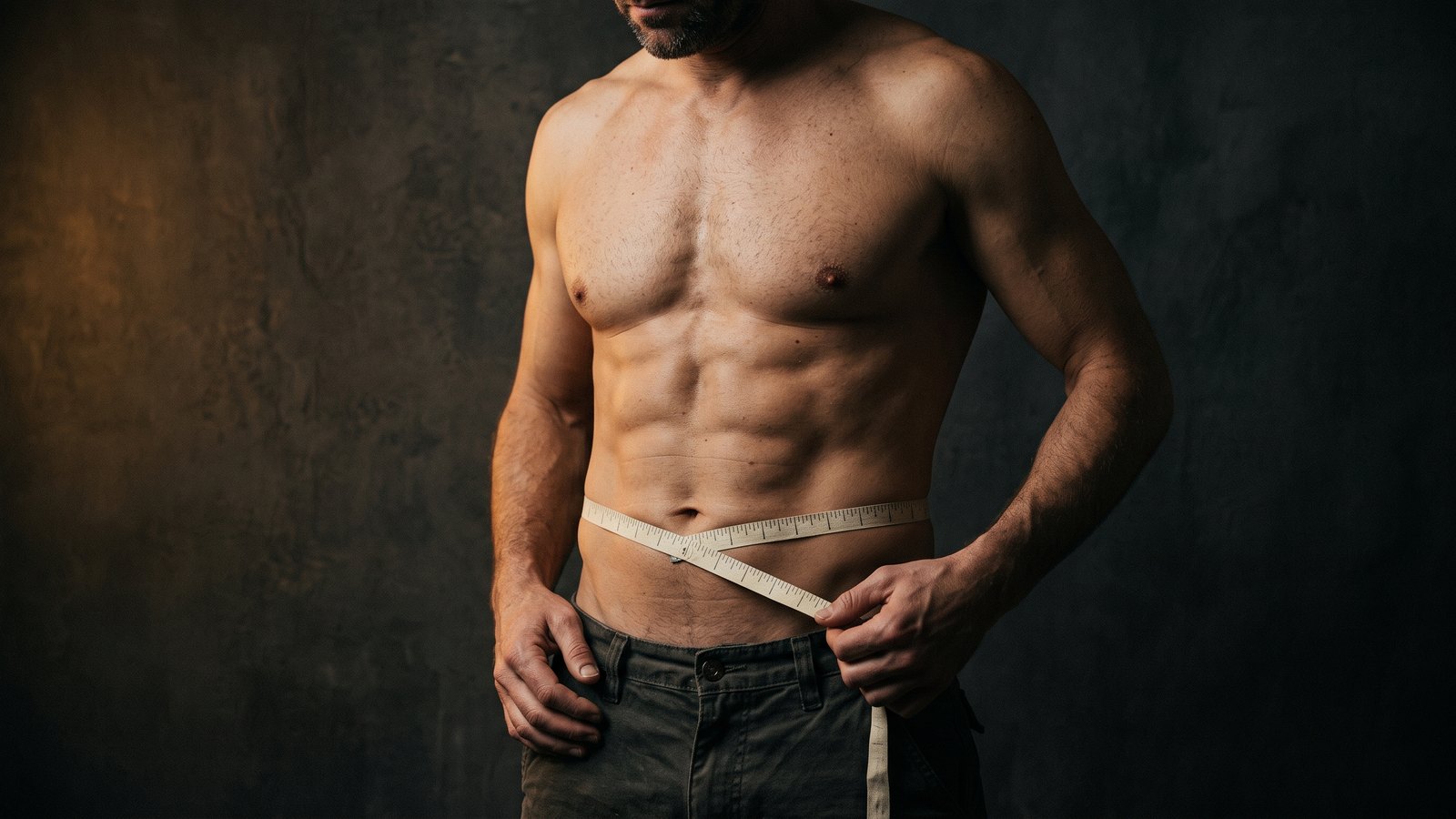
Two men can carry the same gut and face very different odds. The reason is not how much belly fat they have. It is where that fat sits. Men are wired to store fat deep in the abdomen, and that deep fat behaves nothing like the soft layer you can pinch.
Here is the verdict up front. The fat under your skin, the kind you can grab, is mostly along for the ride. The fat packed deep around your organs is the one that drives the real trouble, and it is the one worth measuring and working on. The good news is that it also tends to be the first fat to leave when you put in the work.
The two kinds of belly fat
Subcutaneous fat is the layer that sits just under your skin, all over your body. It is what you feel when you grab your love handles or pinch your gut. It is soft, it is visible, and for the most part it is not the villain it gets treated as.
Visceral fat is different. It lives deeper, inside your abdominal wall, wrapped around your liver, gut, and other organs. You cannot pinch it. A man with a hard, round, sticking-out belly often has a lot of it, even if there is not much to grab on the surface. This is the fat that acts less like storage and more like a busy, inflammatory organ of its own.
Why visceral fat is the dangerous one
Visceral fat is not passive padding. It is metabolically active tissue that pumps out fatty acids and inflammatory signals close to your liver, and that cascade is tied to insulin resistance and the whole cluster of problems that travel with metabolic syndrome (Vissers et al., 2013).
That is not just theory on a lab bench. In a UK Biobank study of nearly 439,000 adults, men in the highest fifth for visceral fat had roughly a 24 percent higher risk of dying from any cause over the follow-up, compared with men in the middle (Yu et al., 2022). Subcutaneous fat simply does not carry that same weight. When researchers can separate the two, it is the deep fat that keeps showing up next to the bad outcomes.
How to measure it without a scan
A proper read of visceral fat comes from a CT or DEXA scan, but you do not need one to get a useful signal. Your waist tells you a lot.
A simple tape measure around your middle beats the bathroom scale here, because it captures where you carry fat, not just how heavy you are. In one large analysis, a predicted visceral fat score built from waist size and a few basics did a better job of forecasting death than body mass index or waist circumference on their own (Brown et al., 2016). Waist size is also a fair stand-in for tracking change over time. When men lose visceral fat through training, their waist shrinks right along with it (Armstrong et al., 2022). A shrinking waist at a steady bodyweight is a good sign you are losing the fat that matters.
The honest nuance
A couple of things keep this from being black and white. First, visceral fat is a marker, not a lone cause. It travels with poor diet, low activity, and extra bodyweight, and untangling one from the rest is not clean. Second, the risk link is not equally strong at every age. In a study of men in their seventies, deep abdominal fat was not tied to new heart disease events at all (Schousboe et al., 2018). The danger signal is loudest in midlife, which is exactly when most men should be paying attention.
None of this means subcutaneous fat is meaningless or that you should chase a number to the point of obsession. It means that if you are going to focus your effort somewhere, the deep fat and your waistline are the smart target.
What actually shifts it
The encouraging part is that visceral fat responds well to plain, boring work, and it often comes off first.
Move, and lean on cardio
Aerobic exercise is the standout here. A meta-analysis found that regular aerobic training, with no change in diet at all, meaningfully cut visceral fat, trimming more than 40 square centimeters of it in men over about 12 weeks (Vissers et al., 2013). A later network analysis pointed the same way. Moderate-to-hard aerobic work and high-intensity intervals both reduced visceral fat, while resistance training on its own did not move it much. The effective dose was about three sessions a week for 12 to 16 weeks (Chang et al., 2021). Lifting is still worth doing for muscle and strength, but for the deep fat specifically, cardio pulls more weight, and steady zone 2 work is an easy place to start.
Fix the diet and the deficit
You cannot out-train a bad diet, and you cannot spot-reduce your gut with crunches. Visceral fat leaves when you are in a real calorie deficit over time, driven by whole foods, enough protein, and less liquid sugar and alcohol. The exercise accelerates it. The eating makes it stick.
Be patient and track your waist
Watch the tape, not just the scale. Because visceral fat is often the first to go, you can be losing the fat that matters most while the number on the scale barely budges. A waistline that is slowly shrinking is the win, even on a week the scale disappoints. Our muscle and fat-loss guides cover the rest of the playbook.
The verdict
Not all belly fat is created equal. The soft fat you can pinch is mostly cosmetic. The deep fat you cannot is the one tied to insulin resistance and higher risk, and it is worth measuring with a tape and working off with steady cardio and an honest diet. Keep your expectations grounded. This is not about chasing a six-pack, it is about shrinking the fat that quietly raises the stakes. If your waist is well above healthy for your height and you have other warning signs like high blood pressure or blood sugar, that is a reason to loop in your doctor, not just add another gym session.
References
- Vissers D, Hens W, Taeymans J, et al. The effect of exercise on visceral adipose tissue in overweight adults: a systematic review and meta-analysis. PLoS One. 2013. https://pubmed.ncbi.nlm.nih.gov/23409182/
- Yu B, Sun Y, Du X, et al. Age-specific and sex-specific associations of visceral adipose tissue mass and fat-to-muscle mass ratio with risk of mortality. J Cachexia Sarcopenia Muscle. 2022. https://pubmed.ncbi.nlm.nih.gov/36447372/
- Brown JC, Harhay MO, Harhay MN. Anthropometrically-predicted visceral adipose tissue and mortality among men and women in the third National Health and Nutrition Examination Survey (NHANES III). Am J Hum Biol. 2016. https://pubmed.ncbi.nlm.nih.gov/27427402/
- Armstrong A, Jungbluth Rodriguez K, Sabag A, et al. Effect of aerobic exercise on waist circumference in adults with overweight or obesity: a systematic review and meta-analysis. Obes Rev. 2022. https://pubmed.ncbi.nlm.nih.gov/35383401/
- Chang YH, Yang HY, Shun SC. Effect of exercise intervention dosage on reducing visceral adipose tissue: a systematic review and network meta-analysis of randomized controlled trials. Int J Obes (Lond). 2021. https://pubmed.ncbi.nlm.nih.gov/33558643/
- Schousboe JT, Kats AM, Langsetmo L, et al. Central obesity and visceral adipose tissue are not associated with incident atherosclerotic cardiovascular disease events in older men. J Am Heart Assoc. 2018. https://pubmed.ncbi.nlm.nih.gov/30369326/
Common questions
What is the difference between visceral and subcutaneous fat?
Subcutaneous fat is the soft layer just under your skin, the kind you can pinch. Visceral fat sits deeper, wrapped around the organs inside your abdominal wall, and you cannot grab it. The deep visceral fat is metabolically active and is the type tied to insulin resistance and higher health risk, while subcutaneous fat is largely cosmetic.
Which belly fat is more dangerous for men?
Visceral fat, the deep kind, is the more dangerous one. In a UK Biobank study of nearly 439,000 adults, men with the most visceral fat had about a 24 percent higher risk of dying from any cause than men in the middle (Yu et al., 2022). Subcutaneous fat does not carry that same risk. A hard, sticking-out belly can hold a lot of visceral fat even when there is little to pinch.
How can I measure visceral fat without a scan?
Use a tape measure around your waist. A CT or DEXA scan is the gold standard, but waist size gives a useful, cheap signal, and a visceral fat estimate built from waist measurements predicted mortality better than body mass index alone (Brown et al., 2016). Because your waist shrinks as visceral fat drops, tracking it over time is a fair way to gauge progress.
What is the best exercise to lose visceral fat?
Aerobic exercise is the best exercise to lose visceral fat. Regular cardio reduced visceral fat even without any diet change, cutting more than 40 square centimeters in men over about 12 weeks (Vissers et al., 2013), and both moderate-to-hard cardio and high-intensity intervals worked, while resistance training alone did not move it much (Chang et al., 2021). Lifting is still worth doing for muscle, but for deep fat, cardio plus a real calorie deficit does the job.