Health
Blood Pressure: The Quiet One Most Men Ignore
It does not hurt, it does not slow you down, and it does not show up in the mirror. That is exactly why blood pressure is the number most men let slide. Here is what the evidence actually says.
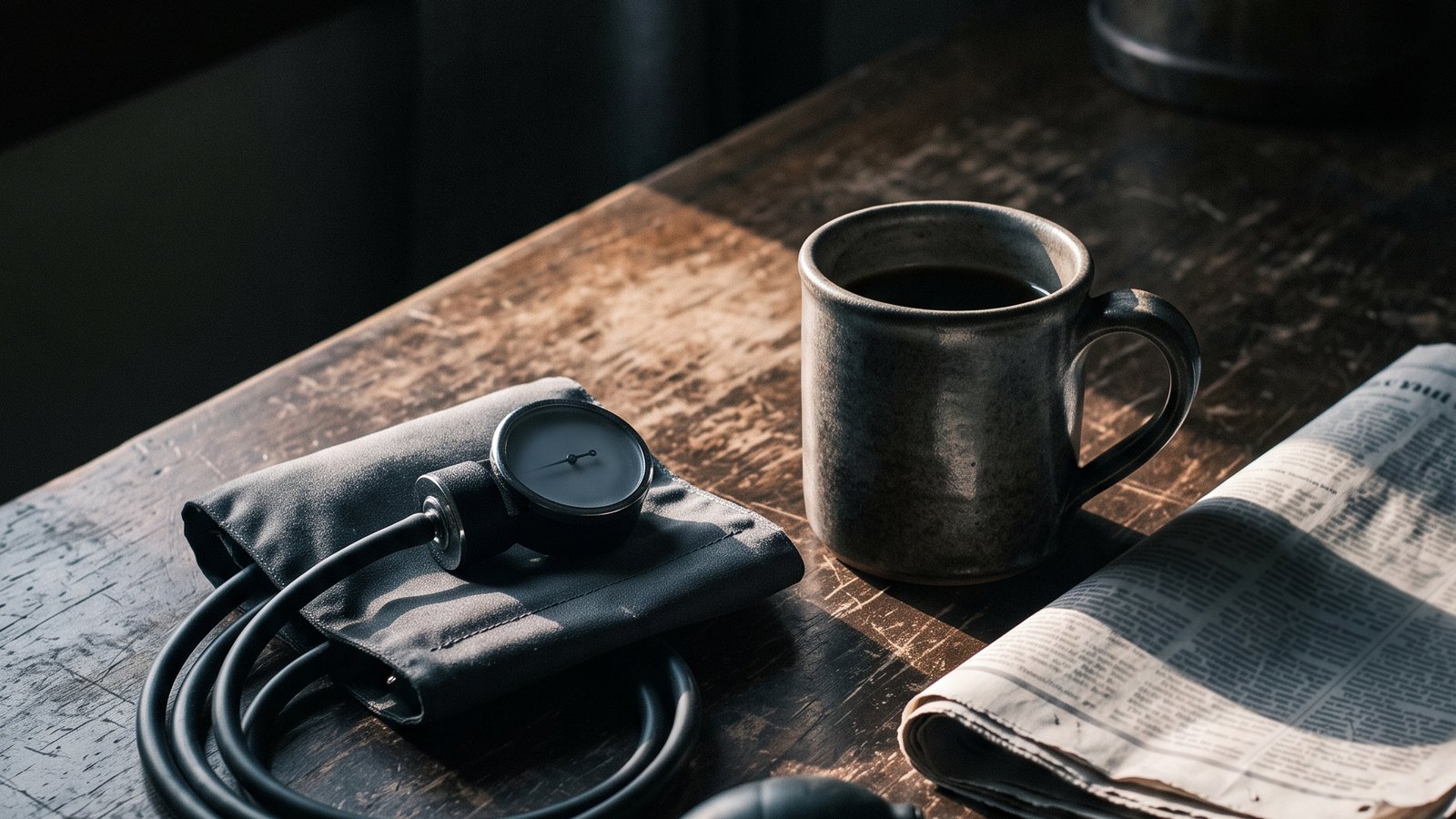
Most of the things men worry about announce themselves. A bad knee hurts. A gut shows up in photos. Blood pressure does none of that. You can walk around for twenty years with a number that is quietly grinding on your arteries and feel completely fine the whole time. That is the whole problem, and it is why this one gets ignored.
So let us treat it like what it is. A number you can measure in your kitchen for the price of a decent pair of shoes, that responds to things you already know how to do, and that matters more than almost any other test you will take this decade.
How common is this, really
More common than you think. In the most recent national survey data, 47.7 percent of US adults had high blood pressure, and the rate was higher in men at 50.8 percent than in women at 44.6 percent. It climbed hard with age, from 23.4 percent in men and women aged 18 to 39, up to 52.5 percent at 40 to 59, and 71.6 percent past 60 (Fryar et al., 2024).
Now the part that should get your attention. Among adults who had it, only 59.2 percent were even aware of it. About one in five had it controlled to under 130 over 80. And none of those numbers had improved meaningfully since the previous survey period (Fryar et al., 2024).
Read that again. Roughly four in ten men walking around with high blood pressure do not know. If you have not checked in a few years, you are guessing.
Why the number is worth chasing
The strongest evidence here comes from SPRINT, which took 9,361 people with elevated systolic pressure and extra cardiovascular risk and split them into two targets: under 120, or under 140. The tighter target cut the rate of heart attacks, strokes, heart failure, and cardiovascular death by 25 percent, and cut death from any cause by 27 percent. The trial was stopped early, at a median of 3.26 years, because the benefit was clear enough that continuing did not seem right (SPRINT Research Group, 2015).
Here is the honest other half. Pushing that hard came with a cost. The intensive group had higher rates of low blood pressure episodes, fainting, electrolyte problems, and acute kidney injury. Falls that caused injury were not higher, but the rest were real (SPRINT Research Group, 2015).
What that means for you is simple. Lower is generally better, but the target is a conversation with your doctor, not something you set yourself off a headline. If you are on medication, do not change the dose based on a blog post. Talk to your prescriber.
Measure it right or do not bother
Before you change anything, get an accurate baseline. Most men measure wrong, and the error is bigger than they think.
A crossover trial had participants get their blood pressure taken three ways: arm supported on a desk at heart level, hand resting on the lap, and arm hanging unsupported at the side. Compared with the desk position, resting the hand on the lap added about 3.9 mmHg to systolic and 4.0 to diastolic. Letting the arm hang at the side added about 6.5 systolic and 4.4 diastolic (Liu et al., 2024).
Six points is not a rounding error. That is the difference between a number your doctor shrugs at and one that starts a conversation about medication. Sloppy positioning can manufacture a diagnosis you do not have.
The practical version:
- Buy a validated upper arm cuff. Skip the wrist gadgets.
- Sit with your back supported and both feet flat on the floor. Do not cross your legs.
- Rest your arm on a table so the cuff sits level with your heart.
- No caffeine, no smoking, and no exercise for 30 minutes beforehand. Empty your bladder first.
- Sit quietly for five minutes, then take two or three readings a minute apart and average them.
- Measure at the same times, morning and evening, for about a week. Judge the average, not any single reading.
The five levers with real numbers
This is where it gets useful. Every one of these has trial data behind it, and the effects stack.
1. Lose the weight you are carrying
Across 25 randomized trials with 4,874 people, an average loss of about 5.1 kg, roughly 11 pounds, dropped systolic pressure by 4.4 mmHg and diastolic by 3.6. Groups that lost more than 5 kg saw bigger drops than groups that lost less (Neter et al., 2003). That works out to roughly a point of systolic per kilogram, which makes even a modest cut worth something, and the playbook for losing the gut after 35 is the same one.
2. Train, and pick your mode on purpose
A network meta-analysis pooled 270 trials and 15,827 participants to rank exercise types. Everything worked. Aerobic training dropped resting pressure by 4.5 over 2.5 mmHg. Dynamic resistance training came in at 4.6 over 3.0. Combined training hit 6.0 over 2.5. High intensity intervals landed at 4.1 over 2.5.
The standout was isometric work, meaning holds rather than reps, at 8.2 over 4.0 mmHg. Wall squats ranked as the single most effective submode for systolic pressure (Edwards et al., 2023).
Do not read that as a reason to quit lifting or running, which carry longevity benefits of their own. Read it as a cheap add-on. A few sets of two-minute wall sits a few days a week costs you almost nothing.
3. Eat like the DASH trial
The original DASH trial fed 459 adults one of three diets while holding sodium and body weight steady. The combination diet, heavy on fruits, vegetables, and low fat dairy, with saturated and total fat cut back, lowered systolic pressure by 5.5 mmHg and diastolic by 3.0 more than the control diet.
The bigger story is who benefited most. Among the 133 people who already had hypertension, that same diet dropped systolic pressure by 11.4 mmHg and diastolic by 5.5 (Appel et al., 1997). That is medication territory, from food, in eight weeks.
One part of that diet does more of the work than its share of the plate. The nitrate in beets and leafy greens converts to nitric oxide and widens your blood vessels, and the beetroot research is specific enough to give you a dose.
4. Pull the sodium down
The follow-up trial ran 412 people through high, intermediate, and low sodium levels on either the control diet or the DASH diet. Sodium mattered on its own, and it mattered most on top of a bad diet. But the headline is the combination. Compared with the control diet at high sodium, the DASH diet at low sodium ran 7.1 mmHg lower in people without hypertension and 11.5 mmHg lower in those with it (Sacks et al., 2001).
Most of your sodium is not the shaker on the table. It is bread, deli meat, canned soup, sauces, and restaurant food. Cook more and the number falls without you thinking about it.
5. Look honestly at the drinking
A meta-analysis of 36 trials with 2,865 participants, most of them men, found a clear threshold. In people drinking two or fewer drinks a day, cutting back did not move blood pressure much. Above two drinks a day, it did, and the effect scaled with how much you were drinking to begin with. The heaviest drinkers, six or more a day, who cut their intake by about half, dropped systolic pressure by 5.5 mmHg and diastolic by 4.0 (Roerecke et al., 2017).
So this is not a lecture about your two beers on Saturday, and heavy drinking costs you more than blood pressure. If you are genuinely at four, five, six a day, this is one of the biggest single levers on the list.
The verdict
Blood pressure is the rare men's health topic where the science is not murky, which is more than our health guides can say for most subjects. We know it is common, we know most men with it are not on top of it, and we know exactly which habits move it and by how much.
Start by measuring it properly for a week, arm on the table, averages not one-offs. If the number is high, you have five levers with real trial data behind them, and they add up. Lose some weight, train with intent, eat more like DASH, cut the packaged sodium, and be honest about the drinking.
Then bring your home readings to your doctor and let them decide whether medication belongs in the picture. This is general education, not a treatment plan for you specifically.
It will never hurt, and it will never announce itself. Check it anyway, along with the resting heart rate that is just as cheap to track. That is the verdict.
References
- Fryar CD, Kit B, Carroll MD, Afful J. Hypertension Prevalence, Awareness, Treatment, and Control Among Adults Age 18 and Older: United States, August 2021-August 2023. NCHS Data Brief. 2024. https://pubmed.ncbi.nlm.nih.gov/40085792/
- SPRINT Research Group. A Randomized Trial of Intensive versus Standard Blood-Pressure Control. N Engl J Med. 2015. https://pubmed.ncbi.nlm.nih.gov/26551272/
- Liu H, Zhao D, Sabit A, et al. Arm Position and Blood Pressure Readings: The ARMS Crossover Randomized Clinical Trial. JAMA Intern Med. 2024. https://pubmed.ncbi.nlm.nih.gov/39373998/
- Neter JE, Stam BE, Kok FJ, Grobbee DE, Geleijnse JM. Influence of weight reduction on blood pressure: a meta-analysis of randomized controlled trials. Hypertension. 2003. https://pubmed.ncbi.nlm.nih.gov/12975389/
- Edwards JJ, Deenmamode AHP, Griffiths M, et al. Exercise training and resting blood pressure: a large-scale pairwise and network meta-analysis of randomised controlled trials. Br J Sports Med. 2023. https://pubmed.ncbi.nlm.nih.gov/37491419/
- Appel LJ, Moore TJ, Obarzanek E, et al. A clinical trial of the effects of dietary patterns on blood pressure. N Engl J Med. 1997. https://pubmed.ncbi.nlm.nih.gov/9099655/
- Sacks FM, Svetkey LP, Vollmer WM, et al. Effects on blood pressure of reduced dietary sodium and the Dietary Approaches to Stop Hypertension (DASH) diet. N Engl J Med. 2001. https://pubmed.ncbi.nlm.nih.gov/11136953/
- Roerecke M, Kaczorowski J, Tobe SW, et al. The effect of a reduction in alcohol consumption on blood pressure: a systematic review and meta-analysis. Lancet Public Health. 2017. https://pubmed.ncbi.nlm.nih.gov/29253389/
Common questions
What is considered high blood pressure for a man?
Current US guidelines call 130 over 80 or higher high blood pressure, and that is the definition behind the survey numbers showing just over half of American men have it. Anything under 120 over 80 is considered normal. One high reading is not a diagnosis. Average a week of properly taken home readings before you draw conclusions.
How do I take my blood pressure correctly at home?
Use a validated upper arm cuff, not a wrist device. Sit with your back supported, feet flat, legs uncrossed, and your arm resting on a table so the cuff is level with your heart. Skip caffeine, nicotine, and exercise for 30 minutes first, sit quietly for five minutes, then take two or three readings a minute apart and average them. Letting your arm hang at your side instead can add about 6 mmHg to the reading.
Can I lower my blood pressure without medication?
Lifestyle changes have real trial data behind them. Losing about 11 pounds dropped systolic pressure roughly 4 mmHg, a DASH style diet dropped it 11.4 mmHg in people who already had hypertension, and exercise dropped it 4 to 8 mmHg depending on the type. Whether that is enough on its own depends on your starting number and your overall risk, which is a conversation for your doctor. Never stop a prescribed medication on your own.
What kind of exercise lowers blood pressure most?
In a pooled analysis of 270 trials, every mode helped, but isometric training, meaning holds instead of reps, led the pack at about 8 mmHg systolic. Wall squats ranked as the single most effective submode. Aerobic work, resistance training, and intervals all landed in the 4 to 6 mmHg range. The best plan is the one you will keep doing, with a few isometric holds added on.
Does cutting back on alcohol lower blood pressure?
Whether cutting back on alcohol lowers blood pressure depends where you are starting. In trials, people drinking two or fewer drinks a day saw little change when they cut back. Above that, the benefit showed up and grew with intake. Heavy drinkers at six or more a day who halved their intake dropped systolic pressure by about 5.5 mmHg.