Hormones
Sleep and Testosterone: The Overlooked Lever Most Men Ignore
You make most of your testosterone overnight, which means short sleep, snoring, and the nightly drink cost you more than you think.
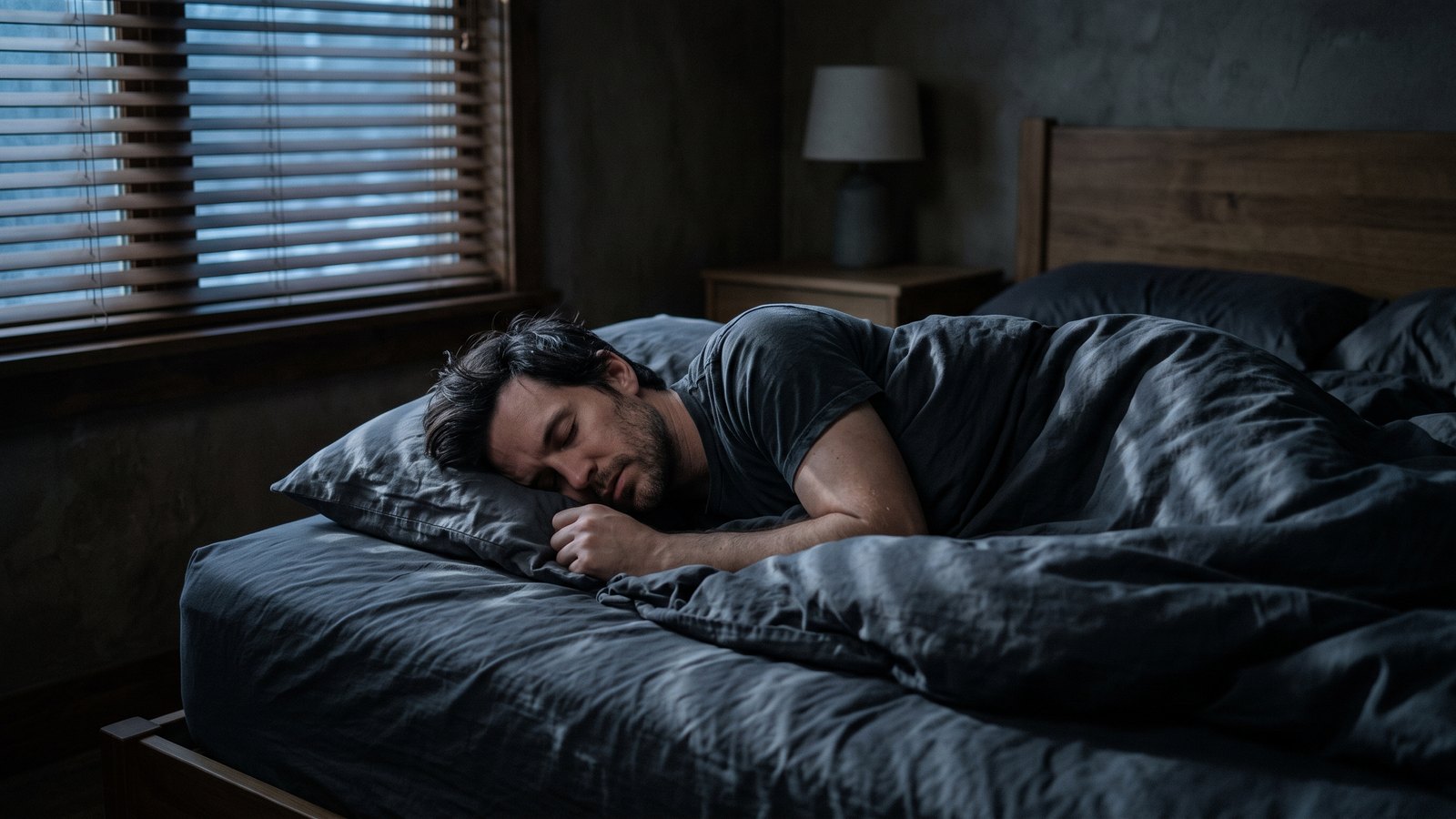
Most men chasing better testosterone are looking in the wrong place. They buy the powder, tweak the diet, add another lift day, and skip the one lever that does more than any of them. Sleep.
Here is the short version. Your body makes most of its testosterone while you sleep. Cut your sleep short and the number drops within days. Sleep well again and a suppressed level often climbs back toward where it belongs. No pill in the cabinet works that fast or that cheap.
This is not a hack. It is basic male physiology, and the research behind it is solid. Let us walk through how it works and what actually protects it.
You build testosterone while you sleep
Testosterone is not made at a steady drip through the day. It follows a daily rhythm. Levels climb while you sleep, peak in the early morning, and drift down as the day goes on. That morning high you have heard about is real, and it gets built overnight.
That rhythm is driven by sleep itself, not just the clock on the wall. Skimp on the sleep and you skimp on the testosterone your body would have built overnight. Get the sleep and you get the rise. Miss it and you do not.
The stages your brain moves through at night matter too. When researchers drew blood every 20 minutes overnight, they could watch testosterone being released during sleep, and men whose sleep was broken up released less of it (Luboshitzky et al., 2002). Being in bed is not the same as sleeping. Your body needs real, uninterrupted sleep to do the work.
What short sleep does to the number
The cleanest evidence comes from a controlled experiment. Healthy young men, average age in their mid twenties, spent one week sleeping about 5 hours a night. Their daytime testosterone fell by 10 to 15 percent (Leproult and Van Cauter, 2011). One week. Not a month, not a year. A stretch of short nights pushed young men's levels down toward what you might expect from someone a decade or more older.
That study is not alone. A broader review of sleep and male hormones found that sleep loss and shorter sleep line up with lower testosterone in the morning, in the afternoon, and across the full 24 hour day (Liu and Reddy, 2022). The less you sleep, the less you tend to make.
Be honest about what this means. These are averages, and one rough night will not wreck you. Your body is more resilient than that. The problem is the pattern. Five or six hours a night, week after week, is a slow leak most men never connect to how they feel.
Sleep apnea is a quiet drain
Some men sleep eight hours and still wake up wrecked. One common reason is obstructive sleep apnea, where the airway keeps collapsing through the night and jolts you out of deep sleep without fully waking you. You may not remember any of it. Your hormones still notice.
A meta-analysis that pooled 18 studies and more than 1,800 men found that sleep apnea was linked to lower testosterone, and the link grew stronger as the apnea grew more severe. It held up even after accounting for age and body weight (Su et al., 2022). That fits what happens overnight. Every interruption and dip in oxygen chips away at the testosterone your body is trying to release while you sleep.
Here is the honest caveat. Apnea and extra body fat tend to travel together, and some of the low testosterone in these men is driven by the weight rather than the apnea alone (Wittert, 2014). That does not make it less of a problem. It means the fix usually runs through both. If you snore loudly, gasp or choke at night, or feel exhausted no matter how long you were in bed, that is worth a conversation with a doctor, not another supplement.
Age tilts the field
Testosterone slips a little with age on its own, and that is normal. The trouble is that sleep problems tend to pile up with age too. Sleep debt, a drifting body clock, and conditions like apnea all get more common, and the sleep you miss gets harder to fully make up later. Over years, that adds up.
Length matters in both directions here. In a study of more than 1,200 men over 65, testosterone was highest in those getting a moderate amount of sleep and lower both in the men who slept the least and in those who slept the most (Auyeung et al., 2015). More is not automatically better. Very long sleep in an older man can be a flag that his sleep quality is poor or that something else is going on. The goal is enough good sleep, not the most time in bed.
How to protect it
You cannot supplement your way around bad sleep, and even the other levers that support healthy testosterone work better on a rested body. What you can do is protect the sleep that protects your testosterone. None of this is fancy.
Get enough, on a consistent schedule
Aim for 7 to 9 hours most nights, and keep your bedtime and wake time close to the same every day, weekends included. Consistency helps your body settle into the deep, uninterrupted sleep where the hormone work happens. A steady 7 hours beats a random mix of 5 one night and 10 the next.
Take snoring seriously
Loud snoring, gasping, or waking up tired after a full night in bed are not just annoyances. They can point to sleep apnea, the snoring most men keep writing off, and it is very treatable once a doctor identifies it. Getting it looked at is worth doing for reasons that go well beyond your testosterone.
Go easy on alcohol before bed
A nightcap feels like it helps you sleep. It does the opposite for the quality of that sleep. Alcohol close to bedtime fragments your rest and cuts into the deeper stages later in the night, which is exactly when your body is doing its hormonal work. A drink now and then is not the enemy. Making it a nightly habit, or drinking heavily, works against the sleep you are trying to protect, on top of what heavy drinking already does to your testosterone.
The verdict
Sleep is the most overlooked testosterone lever most men have, and it is free. You make the hormone overnight. Short sleep drops it within days. Apnea drains it quietly, and age raises the stakes. Sleep well and a low number often recovers on its own, no bottle required.
Set the same realistic expectation you should set for everything in this space. Good sleep does not turn an average man into a superhero. It takes a brake off that you did not know was on. If your sleep is already solid and you still notice the classic signs of low testosterone, like low drive, deep fatigue, weak morning erections, or muscle you cannot seem to hold onto, that is your signal to see a doctor and get real bloodwork, not to buy another pill. Our hormone guides cover the rest of that picture.
References
- Leproult R, Van Cauter E. Effect of 1 week of sleep restriction on testosterone levels in young healthy men. JAMA. 2011. https://pubmed.ncbi.nlm.nih.gov/21632481/
- Wittert G. The relationship between sleep disorders and testosterone. Curr Opin Endocrinol Diabetes Obes. 2014. https://pubmed.ncbi.nlm.nih.gov/24739309/
- Luboshitzky R, Aviv A, Hefetz A, et al. Decreased pituitary-gonadal secretion in men with obstructive sleep apnea. J Clin Endocrinol Metab. 2002. https://pubmed.ncbi.nlm.nih.gov/12107256/
- Su L, Meng YH, Zhang SZ, et al. Association between obstructive sleep apnea and male serum testosterone: a systematic review and meta-analysis. Andrology. 2022. https://pubmed.ncbi.nlm.nih.gov/34536053/
- Auyeung TW, Kwok T, Leung J, et al. Sleep duration and disturbances were associated with testosterone level, muscle mass, and muscle strength: a cross-sectional study in 1274 older men. J Am Med Dir Assoc. 2015. https://pubmed.ncbi.nlm.nih.gov/25959075/
- Liu PY, Reddy RT. Sleep, testosterone and cortisol balance, and ageing men. Rev Endocr Metab Disord. 2022. https://pubmed.ncbi.nlm.nih.gov/36152143/
Common questions
Will one bad night of sleep lower my testosterone?
One bad night of sleep will not lower your testosterone in any way you need to worry about. Your body handles the occasional short night fine. The research that shows a real drop, around 10 to 15 percent, came from a full week of sleeping only about 5 hours a night in young men (Leproult and Van Cauter, 2011). What hurts your levels is the ongoing pattern of short sleep, not a single rough night.
How much sleep is best for testosterone?
For most men, 7 to 9 hours of sleep on a consistent schedule is best for testosterone. Both ends of the range can be a problem. Too little sleep lowers testosterone, and in older men, very long sleep tracks with lower levels too, often because it signals poor sleep quality or another health issue. Aim for enough good sleep rather than the most sleep.
If I fix my sleep, will my testosterone go back up?
If poor sleep was dragging it down, often yes. A suppressed, low number tends to drift back toward your own normal once you sleep enough on a regular schedule. What better sleep will not do is push you past your personal ceiling. It takes a brake off. It does not add rocket fuel.
Should I get checked for sleep apnea?
If you snore loudly, gasp or choke during the night, or wake up tired no matter how long you were in bed, yes. Talk to a doctor. Sleep apnea is common, it is linked to lower testosterone as it gets more severe (Su et al., 2022), and it is treatable once it is diagnosed. Do not try to sort it out with supplements.