Supplements
Is Butyrate Worth the Hype? Yes, But Only in the Right Form
Tributyrin, sodium butyrate, BIOMEnd lysine butyrate. Only one head-to-head study exists. We read the whole thing, including the parts the press releases skipped.
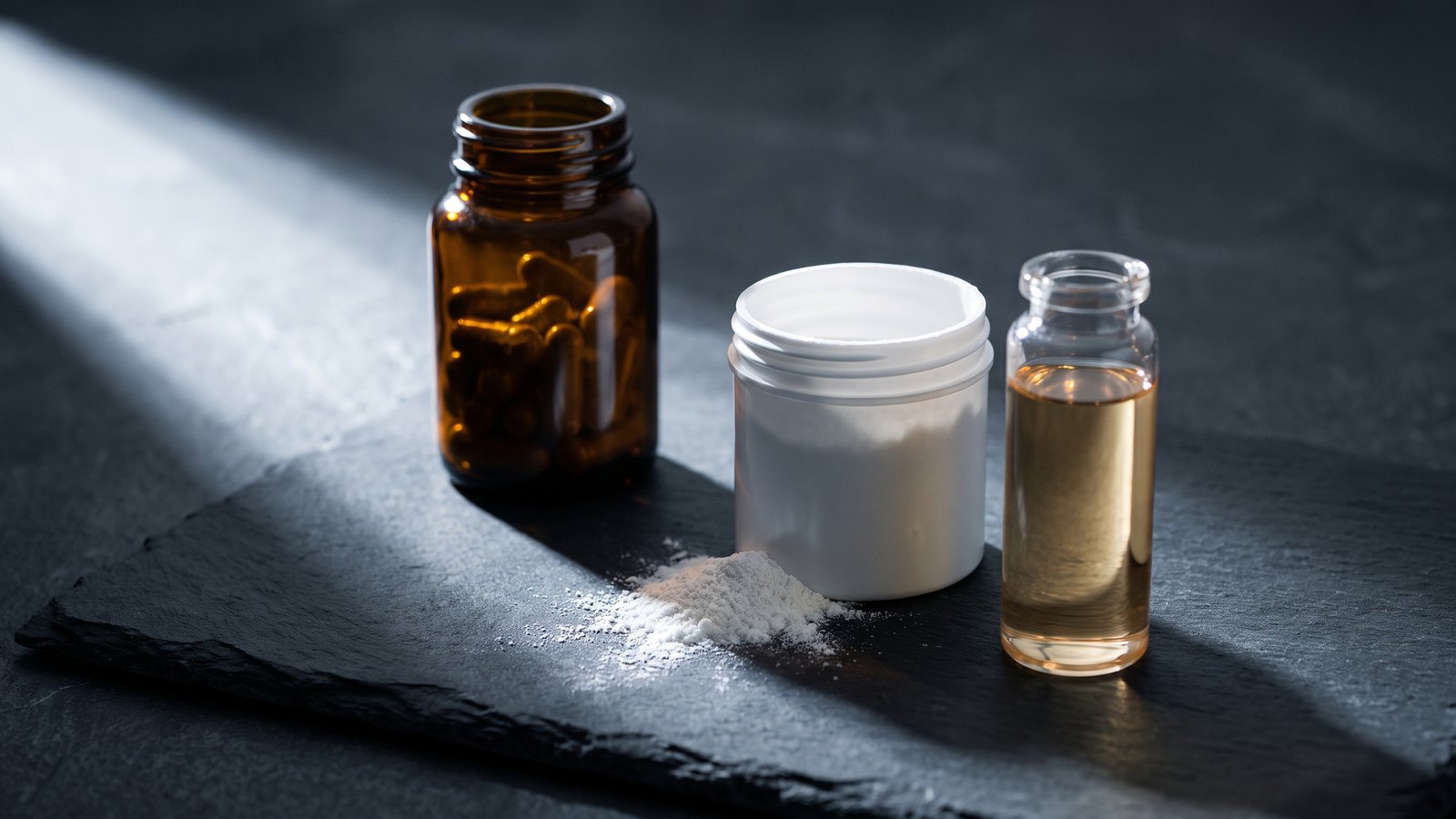
Butyrate is having its moment. Two years ago it was a niche gut health compound. Now it is on shelves everywhere, in capsules, oils, powders, and drinks, with claims stretching from digestion to mood to metabolism.
The biology behind the hype is genuinely good. The supplements are where it gets complicated, because butyrate has an unusual problem: swallowing it does not reliably put it in your blood, and the three common forms on the market behave very differently.
Here is the verdict up front. Butyrate is worth paying attention to, but the form decides whether you are buying anything at all. Tributyrin performed worst in the only head-to-head human comparison that exists. Lysine butyrate and sodium butyrate both beat it on how much butyrate reached the blood and how fast. Between those two, that study found no significant difference, whatever the marketing says. Lysine butyrate still wins for a drink, on grounds that have nothing to do with blood levels.
What butyrate actually does
Butyrate is a short-chain fatty acid with four carbons. You do not normally eat it. Your gut bacteria make it by fermenting dietary fiber in your colon.
Once there, it is the main energy source for the cells lining your colon. It supports the intestinal barrier by promoting mucus production and the tight junctions that hold the lining together, and it acts as a histone deacetylase inhibitor, which is a fancy way of saying it changes which genes those cells switch on (Hajjar, 2021).
It also signals through three G-protein coupled receptors, which is how a compound made in your gut ends up influencing things well outside it (Hodgkinson, 2022).
That is the real foundation. Now the honest part, from the same review: maintaining butyrate levels improves gut health in animal models, but clinical efforts to raise butyrate in humans and reverse negative outcomes have generated mixed results. The biology is settled. The human outcome data is still being built.
The problem nobody puts on the label
Here is why the form question exists at all.
When butyrate reaches your colon, the cells there consume it. That is its job. Which means most of what you swallow gets used up locally and never shows up in your bloodstream. Researchers studying butyrate for effects outside the gut state the problem directly: oral supplementation as sodium butyrate is limited because butyrate is rapidly metabolized by colonocytes, resulting in low plasma and brain concentrations (Bohnen, 2025).
So a product can contain a real dose of butyrate and still deliver very little to your circulation. If what you want is gut-local support, that is fine, arguably ideal. If you want systemic effects, blood levels are the thing to measure.
That is exactly what one study set out to do.
The only head-to-head comparison
In January 2025, researchers published a randomized three-arm crossover trial comparing the three forms you actually find on shelves. Ten men, four visits, each arm delivering the same 786 mg of butyric acid as either lysine butyrate, sodium butyrate, or tributyrin. Blood drawn before dosing and at 20, 45, 90, 150, and 210 minutes after (La Monica, 2025, trial registration NCT06700785).
The results:
- Peak blood level. Lysine butyrate 4.53 µg/mL, sodium butyrate 2.51, tributyrin 0.91. Both salts significantly higher than tributyrin.
- Total exposure over 210 minutes. Lysine butyrate 189, sodium butyrate 144, tributyrin 108. Again both salts significantly above tributyrin.
- Time to peak. Lysine butyrate 20.0 minutes, sodium butyrate 22.5, tributyrin 51.5. The salts got there in roughly a third of the time.
The authors' conclusion: lysine butyrate and sodium butyrate exhibit greater bioavailability and more rapid systemic appearance compared to tributyrin.
Tributyrin is the loser here, and it is worth understanding why that is interesting. Tributyrin is a prodrug, three butyrate molecules attached to a glycerol backbone, and it is marketed on the logic that it survives the stomach and releases butyrate further down. That logic may still hold for gut-local delivery. For getting butyrate into blood quickly, it came last on all three measures.
What that study does not say
This is where we part company with most coverage of it.
You will see the figure that lysine butyrate produced a Cmax 180 percent greater than sodium butyrate. That number is real arithmetic, 4.53 divided by 2.51. It is also not a finding. The paper reports plainly that for total exposure, lysine butyrate did not differ from sodium butyrate, p equals 0.660. And for raw serum butyrate over time, there were no post hoc differences between any of the three treatments at all.
Look at the variation and you can see why. Every single arm had a standard deviation larger than its mean. Lysine butyrate's peak was 4.53 with a spread of 7.56. The authors explain this openly: a few participants had hyper responses far above everyone else. They also list the limitations themselves, including a relatively small sample size and a measurement window under four hours.
The funding and affiliations are disclosed in the paper and worth knowing. The research was funded in part by The American Institute of Gastrointestinal Health, and it was conducted at a lab whose principal owner is a co-inventor of a patent on lysine butyrate. He was not involved in running the study, and the disclosure was made voluntarily, which is more transparency than a lot of ingredient research offers. It still belongs in your read of the result.
So the defensible statement is this: both salts clearly beat tributyrin, and lysine butyrate posted the highest numbers of the three. It has not been shown to significantly outperform sodium butyrate on blood levels. Anyone telling you otherwise is quoting a ratio and skipping the p-value.
Why lysine butyrate still wins for a drink
Now the part that actually decides it, and it is not pharmacokinetics.
Butyric acid is the compound responsible for the smell of rancid butter and vomit. That is not a slight against it, it is chemistry. It is the single biggest reason butyrate supplements are almost always capsules: nobody can drink the stuff.
Lysine butyrate, sold under the branded name BIOMEnd, is butyric acid bound to the amino acid L-lysine. That pairing makes it tasteless and fully soluble in liquid, which is what lets it go into a drink at a real dose instead of being hidden in a softgel.
Sodium butyrate does not solve that problem, and it brings a second one. Sodium is right there in the name. If you are taking a meaningful daily dose, that is sodium you are adding on top of a diet that probably has plenty already, and it is the main thing to weigh when you look at what the human trials report on sodium butyrate side effects.
There is also a smaller signal in the data worth noting. Lysine butyrate's time to peak was 20.0 minutes with a standard deviation of exactly zero. Every participant peaked at the same measurement point. Nothing else in that study was that consistent. It is a single timepoint in a ten-person trial, so do not build a religion on it, but consistency of absorption is a reasonable thing to want.
Blood levels are a proxy, not a result
Worth keeping straight: none of the above tells you butyrate does anything for you. A pharmacokinetic study measures delivery. It does not measure benefit.
For benefit, the human evidence is thinner and comes from elsewhere, mostly the natural GLP-1 research. In a randomized double-blind placebo-controlled trial in 60 adults with type 2 diabetes, sodium butyrate raised GLP-1 significantly versus placebo, and the group taking butyrate together with inulin was the only one to significantly reduce fasting blood sugar and waist-to-hip ratio (Roshanravan, 2017). Separately, researchers who engineered a way to deliver a short-chain fatty acid straight to the colon found it raised GLP-1 and PYY, cut food intake, and over 24 weeks reduced weight gain and liver fat in overweight adults (Chambers, 2015).
Encouraging, small, and not the same as proof that any specific product on a shelf does that for you. The blood sugar side of that story starts long before diabetes, with the early signs of insulin resistance.
How to choose
- Want systemic butyrate, in a drink? Lysine butyrate. It is the only form that is tasteless and fully soluble, and it posted the highest peak in the one comparison that exists.
- Want systemic butyrate, do not care about format? Sodium butyrate is a legitimate option on the data. Budget for the sodium and for capsules.
- Want gut-local support specifically? Tributyrin's slower, later release may suit that better, which is why it is being studied for delayed delivery. Just do not buy it expecting fast blood levels.
- Pair it with a prebiotic fiber. In the trial above, butyrate plus inulin outperformed butyrate alone. Feeding your own butyrate-producing bacteria is the cheapest part of this.
- Ignore any brand quoting percentage superiority without the statistics. Now you know what that number is hiding.
Disclosure: Ozzi, mentioned below, is operated by the same people who publish The Fitness Verdict. Everything above about the study applies regardless, and we would rather you check it yourself than take our word for it.
On the drink question specifically, Ozzi is one of the few products using lysine butyrate at a stated 500 mg. Silver Fern Brand's Postbiotic+ is another BIOMEnd product if you prefer capsules. Neither is a magic bullet and neither has outcome data of its own.
The verdict
Butyrate is worth the hype in the sense that the underlying biology is real and well documented. It is not worth the hype in the sense that most of what is claimed for it in humans is still being worked out.
If you are going to take it, the form is the decision that matters. Tributyrin came last on every delivery measure in the only head-to-head test we have. Both salts beat it. Lysine butyrate posted the best numbers and is the only one you can actually put in a drink, which for most people is the deciding factor, not a p-value.
Just know that the gap between lysine butyrate and sodium butyrate has not been demonstrated statistically, only numerically. When a brand tells you it has, you have learned something useful about the brand. Our supplement reviews read every label that way.
That is the verdict.
This is general education, not medical advice. Nothing here is intended to diagnose, treat, cure, or prevent any disease. If you have a diagnosed digestive condition or take medication that affects blood sugar, talk to your doctor before starting a butyrate supplement.
References
- La Monica MB, Kirby T, Hartshorn SL, Gustat A, Grdic J, Sandrock J. A Pharmacokinetic Comparison of Three Butyrate Products. Journal of Exercise and Nutrition. 2025;8(1):4. Trial registration NCT06700785. https://clinicaltrials.gov/study/NCT06700785
- Bohnen JLB, Roytman S, Wigstrom TP, et al. Dietary tributyrin supplementation in Parkinson's disease: An open-label target engagement study. Neurotherapeutics. 2025. https://pubmed.ncbi.nlm.nih.gov/41271518/
- Hodgkinson K, El Abbar F, Dobranowski P, et al. Butyrate's role in human health and the current progress towards its clinical application to treat gastrointestinal disease. Clin Nutr. 2022. https://pubmed.ncbi.nlm.nih.gov/36502573/
- Hajjar R, Richard CS, Santos MM. The role of butyrate in surgical and oncological outcomes in colorectal cancer. Am J Physiol Gastrointest Liver Physiol. 2021. https://pubmed.ncbi.nlm.nih.gov/33404375/
- Roshanravan N, Mahdavi R, Alizadeh E, et al. Effect of Butyrate and Inulin Supplementation on Glycemic Status, Lipid Profile and Glucagon-Like Peptide 1 Level in Patients with Type 2 Diabetes: A Randomized Double-Blind, Placebo-Controlled Trial. Horm Metab Res. 2017. https://pubmed.ncbi.nlm.nih.gov/28962046/
- Chambers ES, Viardot A, Psichas A, et al. Effects of targeted delivery of propionate to the human colon on appetite regulation, body weight maintenance and adiposity in overweight adults. Gut. 2015. https://pubmed.ncbi.nlm.nih.gov/25500202/
Common questions
Which form of butyrate is best?
For getting butyrate into your bloodstream, the two salts beat the prodrug. In a randomized three-arm crossover in 10 men, lysine butyrate and sodium butyrate both produced significantly higher peak levels, higher total exposure, and faster absorption than tributyrin (La Monica, 2025). Between the two salts there was no significant difference. For a drink specifically, lysine butyrate is the practical winner because it is tasteless and fully water soluble.
Is BIOMEnd really better than sodium butyrate?
Lysine butyrate is not better than sodium butyrate on blood levels, based on the available evidence. The head-to-head study reports that lysine butyrate did not differ from sodium butyrate on total exposure, p equals 0.660, and that there were no post hoc differences between treatments for serum butyrate over time (La Monica, 2025). The 180 percent Cmax figure in circulation is a raw ratio of two averages, not a statistically significant result. Where lysine butyrate does clearly win is formulation: tasteless, fully soluble, and no sodium load.
Why is tributyrin worse if it is designed to survive digestion?
Tributyrin may not be worse for everything. It came last on peak level, total exposure, and speed in the head-to-head test, taking 51.5 minutes to peak versus about 20 for the salts (La Monica, 2025). But slower, later release could suit gut-local delivery, which is a different goal. Choose based on whether you want butyrate in your colon or in your blood.
Why do most butyrate supplements come in capsules?
Butyric acid is the compound behind the smell of rancid butter. Putting it in a drink at a meaningful dose is a formulation problem, not a marketing choice. Binding it to L-lysine is what makes it tasteless and fully soluble, which is the entire reason lysine butyrate exists as an ingredient.
Does swallowing butyrate actually raise butyrate in your blood?
Swallowing butyrate raises butyrate in your blood less than you would expect. The cells lining your colon consume butyrate as their primary fuel, so most of what you take is used locally. Researchers studying butyrate for effects outside the gut note that oral sodium butyrate results in low plasma and brain concentrations because it is rapidly metabolized by colonocytes (Bohnen, 2025). That is the whole reason the form comparison matters.
Should I take butyrate with fiber?
Butyrate is probably better taken with a prebiotic fiber. In a randomized double-blind placebo-controlled trial in 60 adults with type 2 diabetes, the group taking sodium butyrate together with inulin was the only one to significantly reduce fasting blood sugar and waist-to-hip ratio (Roshanravan, 2017). Supplemental butyrate delivers the signal directly, and a prebiotic fiber feeds the bacteria that make your own.