Health
Fiber for Men: The Cheapest Upgrade You Are Skipping
It is not exciting, it does not come in a tub with a wolf on the label, and it might be the highest-return change on your plate. Here is what the research supports and what it does not.
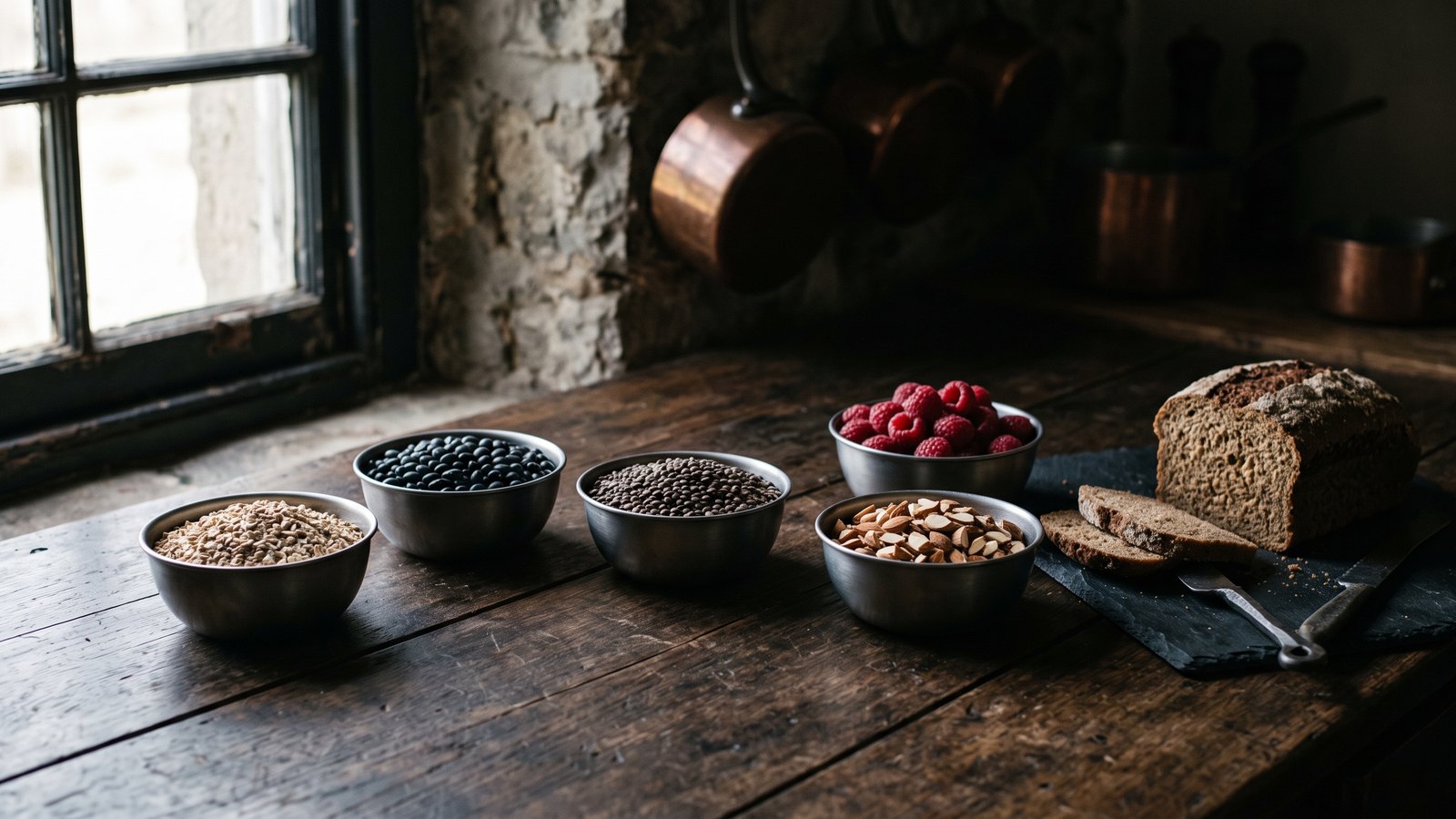
Fiber has an image problem. It sounds like something your grandfather stirred into a glass of water, and it is the one nutrient nobody argues about on a podcast. So it gets skipped while men spend real money on powders with far thinner evidence behind them.
Here is the verdict up front. Fiber has better outcome data than almost anything in your supplement drawer, it reliably moves your cholesterol when you pick the right kind, and it helps your blood sugar. It is also oversold as an appetite killer, and the type you eat matters more than the number on the label. Almost nobody hits the target, including men who think they eat well.
The gap is worse than you think
Start with how far behind most men are. US intake guidance puts the target at roughly 38 grams a day for men under 50 and about 30 grams for men over 50, or about 14 grams for every 1,000 calories you eat. National consumption surveys say only about 5 percent of the population actually gets there, and inadequate intake has been formally called a public health concern (Quagliani and Felt-Gunderson, 2016).
The interesting part of that same paper is the self-deception. Consumer research showed most people are aware fiber is good for them and believe they already get enough. They do not. The common misreads are assuming anything labeled whole grain is a good fiber source, and assuming high-fiber food has to be expensive or taste like cardboard. Beans, oats, and frozen berries are three of the cheapest things in the store.
What the outcome data actually shows
The single best summary of fiber and hard outcomes is a Lancet series of systematic reviews and meta-analyses that pulled together just under 135 million person-years from 185 prospective studies, plus 58 clinical trials. Comparing the highest fiber eaters with the lowest, observational data showed a 15 to 30 percent lower rate of all-cause mortality, cardiovascular mortality, coronary heart disease, stroke, and type 2 diabetes (Reynolds et al., 2019).
The trials in that same analysis, which are the stronger evidence, showed significantly lower bodyweight, lower systolic blood pressure, and lower total cholesterol at higher fiber intakes. Risk reduction was greatest between 25 and 29 grams a day, and the dose-response curves suggested more could be better. The authors graded the certainty of evidence for fiber as moderate, which is a genuinely good grade in nutrition research, and they were direct that the dose-response pattern points toward a causal relationship rather than a coincidence.
That is the honest ceiling on the claim. Most of the striking numbers are still observational, and men who eat 30 grams of fiber a day tend to do a lot of other things right. The reason to take this one seriously anyway is that the trials and the cohorts point the same direction, which is rare.
Cholesterol: this is where fiber earns its keep
If you want the most reliable, most measurable effect, it is here, and only one kind of fiber does it.
A systematic review of the accumulated evidence from other systematic reviews and trials graded foods high in soluble fiber, specifically oats, barley, and psyllium, as high-evidence for producing at least moderate reductions in LDL cholesterol, on the order of 0.20 to 0.40 mmol/L, which is about 8 to 15 mg/dL (Schoeneck and Iggman, 2021). That puts humble oats in the same evidence tier as swapping saturated fat for unsaturated fat.
Psyllium is the one with a proper dose-response. Pooling 21 randomized placebo-controlled trials, psyllium at 3 to 20.4 grams a day lowered total cholesterol by 0.375 mmol/L and LDL by 0.278 mmol/L, roughly 14 and 11 mg/dL, and the effect scaled with the dose (Wei et al., 2009). A newer meta-analysis of 29 trials covering 2,769 people found the same picture, with total cholesterol down 0.28 mmol/L and LDL down 0.35 mmol/L, about 11 and 14 mg/dL. Neither HDL nor triglycerides budged (Zhu et al., 2024).
Two practical takeaways. First, the fiber that lowers cholesterol is the viscous, gel-forming kind. Wheat bran is fine food, but it is not the cholesterol tool. Second, this is an add-on effect, not a substitute for anything your prescriber has you on. If you are on a statin, keep taking it and talk to them before you change anything.
Blood sugar
The blood sugar data is real but more specific than a blanket eat-more-fiber message. A network meta-analysis ranked 16 different soluble fibers across 46 randomized trials in 2,685 adults with type 2 diabetes. Galactomannans, the fiber in guar gum and fenugreek, ranked first for lowering HbA1c and fasting blood glucose, and also came out on top for triglycerides and LDL. Beta-glucans, the fiber in oats and barley, ranked highest for fasting insulin, and psyllium ranked highest for insulin resistance measured by HOMA-IR (Juhász et al., 2023).
Two caveats worth keeping. That research was in people who already have type 2 diabetes, so the size of the effect in a healthy man is likely smaller, though insulin resistance builds quietly for years before that diagnosis. And most comparisons carried low to moderate certainty. The direction is consistent, the precision is not.
The part that is oversold: appetite
Here is where the marketing runs ahead of the science, and it is worth knowing before you buy a tub of anything.
A systematic review looked at 107 individual fiber treatments across 44 publications. Only 39 percent significantly reduced subjective appetite ratings compared with control, and only 22 percent significantly reduced how much food or energy people actually ate. Neither the type of fiber nor the dose reliably predicted whether it worked (Clark and Slavin, 2013).
A much larger review of extracted and isolated fibers, covering 136 human intervention studies, reached a similar conclusion. Most fiber types showed no significant effect on appetite ratings or energy intake. The ones that did anything were the viscous fibers, alginate and guar gum, plus oat fiber. Thickness mattered more than fermentability (Mah et al., 2022).
Cereal fiber from real food does somewhat better. A review of 48 crossover studies in healthy people found higher cereal fiber intake produced favorable effects on satiety, with rye and oat sources clearly ahead of wheat and barley. Even there, the effect on how much people actually ate afterward was limited (Machalias et al., 2026).
Read those three together and the practical read is simple. Fiber helps you feel fuller at the meal, mostly if it is thick and mostly if it comes from oats, rye, beans, or whole fruit. It is not an appetite suppressant, and a scoop of it in water is not going to out-eat a bad week. The gut hormones that actually turn eating off are a separate story.
How to actually close the gap
Anchor on beans and lentils. A cup of cooked black beans or lentils runs roughly 15 grams. Nothing else on the shelf delivers that much fiber per dollar, and they bring protein along with them.
Make oats your default breakfast carb. Beta-glucan is the fiber with both the cholesterol data and the satiety data behind it. Steel-cut or rolled, not the sweetened instant packets.
Eat whole fruit instead of drinking it. Raspberries and blackberries run about 8 grams a cup. Juice strips the fiber out and leaves the sugar.
Read the label instead of trusting the front of the box. The words whole grain on packaging tells you very little about grams of fiber. The nutrition panel tells you exactly.
Consider psyllium only for a specific job. If you are working on an LDL number and cannot close the gap with meals, psyllium has the cleanest dose-response evidence of any fiber supplement. It is a patch, not a plan.
Ramp slowly and drink water. Add about 5 grams a week and spread it across meals. Doubling your intake overnight is how men decide fiber does not agree with them.
The verdict
Fiber is the least glamorous item on this site and one of the best supported. The outcome data spans 135 million person-years and lines up with the trials, the cholesterol effect from soluble fiber is real and measurable, and the blood sugar effect is consistent even if the size varies. What it will not do is kill your appetite or make a bad diet work.
You are probably eating half of what you should. Beans, oats, berries, and reading a label will close most of that gap for a few dollars a week. That is a better return than almost anything you can order online. More of the boring, high-return stuff lives in our health guides.
This article is for general education and is not medical advice. If you take medication, talk to your prescriber before making big changes to your fiber intake, since fiber can affect how some drugs are absorbed and how blood sugar medications are dosed. If you have an inflammatory bowel condition or a history of bowel obstruction, get individual guidance before increasing fiber.
References
- Quagliani D, Felt-Gunderson P. Closing America's Fiber Intake Gap: Communication Strategies From a Food and Fiber Summit. Am J Lifestyle Med. 2016. https://pubmed.ncbi.nlm.nih.gov/30202317/
- Reynolds A, Mann J, Cummings J, Winter N, Mete E, Te Morenga L. Carbohydrate quality and human health: a series of systematic reviews and meta-analyses. Lancet. 2019. https://pubmed.ncbi.nlm.nih.gov/30638909/
- Schoeneck M, Iggman D. The effects of foods on LDL cholesterol levels: A systematic review of the accumulated evidence from systematic reviews and meta-analyses of randomized controlled trials. Nutr Metab Cardiovasc Dis. 2021. https://pubmed.ncbi.nlm.nih.gov/33762150/
- Wei ZH, Wang H, Chen XY, et al. Time- and dose-dependent effect of psyllium on serum lipids in mild-to-moderate hypercholesterolemia: a meta-analysis of controlled clinical trials. Eur J Clin Nutr. 2009. https://pubmed.ncbi.nlm.nih.gov/18985059/
- Zhu R, Lei Y, Wang S, et al. Plantago consumption significantly reduces total cholesterol and low-density lipoprotein cholesterol in adults: A systematic review and meta-analysis. Nutr Res. 2024. https://pubmed.ncbi.nlm.nih.gov/38688104/
- Juhász AE, Greff D, Teutsch B, et al. Galactomannans are the most effective soluble dietary fibers in type 2 diabetes: a systematic review and network meta-analysis. Am J Clin Nutr. 2023. https://pubmed.ncbi.nlm.nih.gov/36811560/
- Machalias A, Ferguson JJA, Guy T, Beck EJ. Cereal Fibers and Satiety: A Systematic Review. Nutr Rev. 2026. https://pubmed.ncbi.nlm.nih.gov/40644449/
- Clark MJ, Slavin JL. The effect of fiber on satiety and food intake: a systematic review. J Am Coll Nutr. 2013. https://pubmed.ncbi.nlm.nih.gov/23885994/
- Mah E, Liska DJ, Goltz S, Chu Y. The effect of extracted and isolated fibers on appetite and energy intake: A comprehensive review of human intervention studies. Appetite. 2022. https://pubmed.ncbi.nlm.nih.gov/36216214/
Common questions
How much fiber should a man eat per day?
US intake guidance puts the target at about 38 grams a day for men under 50 and about 30 grams a day for men over 50, or roughly 14 grams for every 1,000 calories you eat. In the pooled research, the biggest drop in risk showed up somewhere between 25 and 29 grams a day, and the curves kept improving above that. Most men land closer to half of it.
Does fiber lower cholesterol?
Soluble fiber is the kind that lowers cholesterol. In a review of the accumulated trial evidence, foods high in soluble fiber like oats, barley, and psyllium produced at least moderate reductions in LDL cholesterol, in the range of about 8 to 15 mg/dL. Psyllium specifically shows a dose-response, meaning more grams gave a bigger drop. Insoluble fiber from things like wheat bran does not do much for cholesterol.
Will eating more fiber help me lose weight?
Eating more fiber might help you lose weight, and the effect is smaller than the marketing suggests. Higher-fiber diets show up alongside lower bodyweight in trials, but when researchers test fiber head to head for appetite, most treatments do not significantly cut hunger or how much people eat at the next meal. Thick, viscous fibers and cereal fibers like oats and rye do best. Treat fiber as a helper, not a fat-loss lever.
Should I take a fiber supplement or eat real food?
Real food comes first, ahead of a fiber supplement. Whole foods bring fiber along with potassium, magnesium, and everything else that comes attached, and the strongest outcome data is built on food intake. A psyllium supplement is a reasonable add-on if you are chasing an LDL number or you cannot close the gap with meals. It is a patch on the gap, not a replacement for the plate.
How do I add fiber without wrecking my gut?
Go slow and drink more water. Jumping from 15 grams to 40 in a weekend is how men end up bloated and blaming the food. Add about 5 grams a week, spread it across meals instead of front-loading it, and give yourself a few weeks to adjust.