Supplements
Ashwagandha for Men: What the Trials Actually Show on Stress, Sleep, and Testosterone
The adaptogen is everywhere. Here is what the actual randomized trials show on stress, sleep, and testosterone, where the evidence runs thin, and the safety caveats worth knowing.
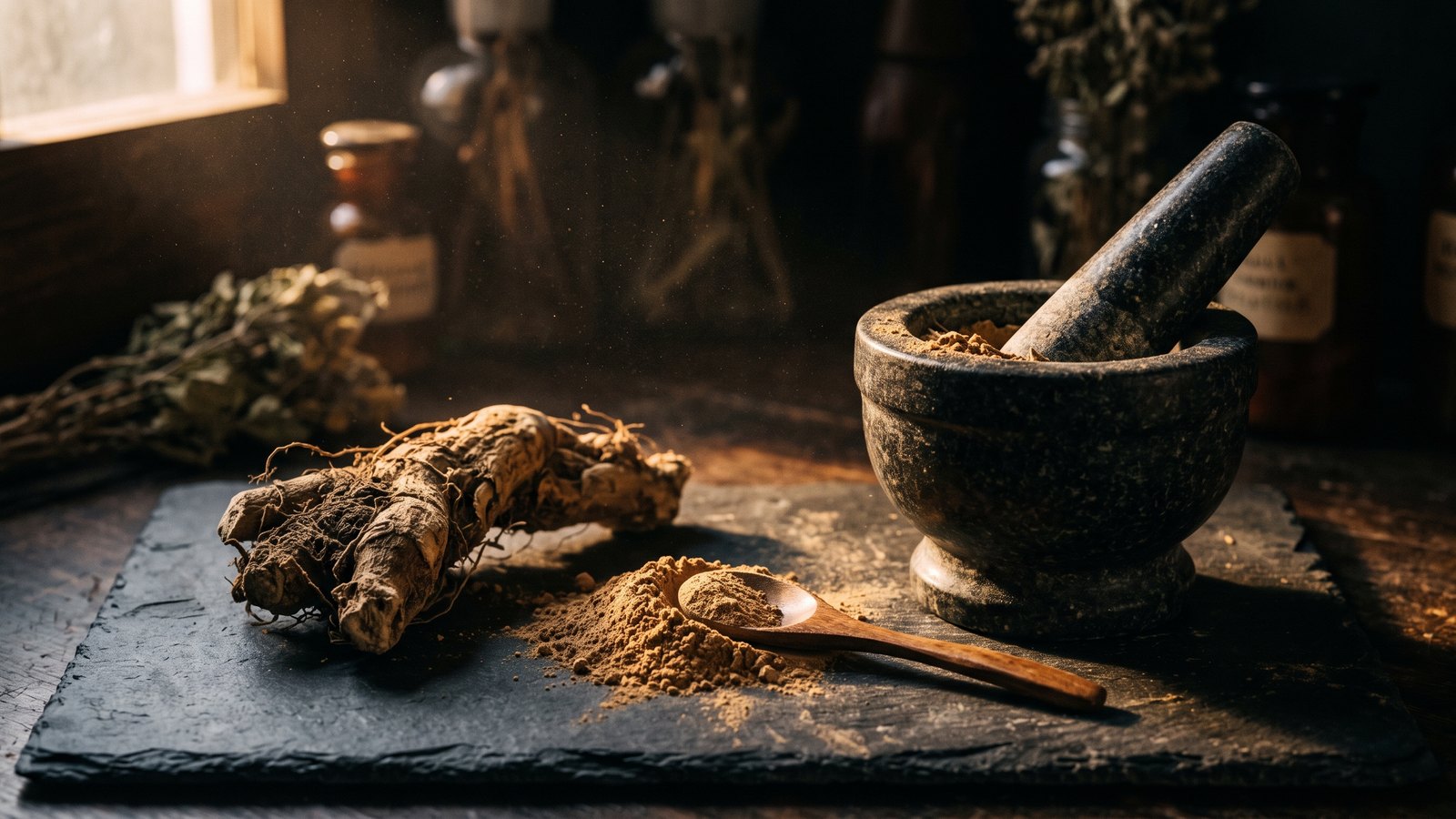
Walk into any supplement shop and ashwagandha is on the shelf, usually with a label promising calm, deeper sleep, and more testosterone. It is an old Ayurvedic herb having a very modern moment. The marketing is loud. The real question is whether the human research backs it up.
Here is the verdict up front. The strongest evidence is for stress and cortisol, where several small trials and a couple of reviews point the same way. Sleep looks promising, but the data is younger and thinner. The testosterone and strength story is real but small, built on a handful of modest studies, some funded by the people selling the extract. Ashwagandha is not a hormone drug and it is not magic. Used with clear eyes, it is one of the better studied herbs a man can consider.
What ashwagandha actually is
Ashwagandha (Withania somnifera) is a shrub used in traditional Indian medicine for centuries. It gets called an adaptogen, a loose term for a plant that is supposed to help the body handle stress. The active compounds are called withanolides, and most modern research does not use raw root powder. It uses standardized extracts that guarantee a set percentage of withanolides.
The names you will see on labels are KSM-66 and Sensoril, along with a higher-concentration extract called Shoden. This matters more than it sounds. When a study shows a result, that result belongs to the specific extract and dose that was tested, not to whatever generic capsule happens to be cheapest online.
Stress and cortisol: the strongest case
This is where ashwagandha has the most support. Cortisol is your main stress hormone, and several trials show the herb nudges it down.
In one 60-day randomized, placebo-controlled trial, 64 chronically stressed adults took 300 mg of a high-concentration root extract twice a day. Their stress-scale scores dropped sharply and their serum cortisol fell significantly compared with placebo (Chandrasekhar, 2012). A later systematic review and meta-analysis pooling nine trials in 558 people found ashwagandha lowered perceived stress, anxiety scores, and serum cortisol versus placebo (Arumugam et al., 2024).
That sounds clean, but here is the honest part. The trials are small. Many are run or funded by the companies that make the extracts. And when researchers pooled 12 studies covering about 1,000 people, they rated the overall certainty of the evidence as low, with a lot of variation between studies (Akhgarjand et al., 2022). Ashwagandha is not a placebo, but the size of the effect you actually get is still fuzzy.
Not every trial is a win, either. A 12-week study in overweight, stressed adults in their 40s to 70s found that ashwagandha did not beat placebo on its main stress measure at all (Smith et al., 2023). The takeaway is not that it flops. It is that the effect is real but modest, and it does not show up for everyone.
Sleep: promising but early
Sleep is the second best supported use. A systematic review and meta-analysis of five trials in 400 people found a small but real improvement in overall sleep, with the biggest gains in people who had insomnia, took at least 600 mg a day, and stayed on it for eight weeks or longer (Cheah et al., 2021). In one representative six-week trial, adults with poor, unrefreshing sleep who took a standardized extract reported a 72 percent jump in self-rated sleep quality, versus 29 percent on placebo, along with objective gains in sleep efficiency and total sleep time (Deshpande et al., 2020).
Good signal. Just keep the size in mind. A small effect across a few hundred people is a reason to try it, not a reason to expect it to fix a serious sleep problem. If you snore heavily, wake up gasping, or drag through every single day, that is a doctor visit, not a supplement.
Testosterone and strength: the smaller, weaker data
This is the claim that sells the most bottles, and it is where you should be most skeptical, the same place tongkat ali and fadogia live.
Some men do see a bump. In a 16-week crossover trial in overweight men aged 40 to 70, a standardized extract raised testosterone by about 14.7 percent and DHEA-S by about 18 percent compared with placebo (Lopresti et al., 2019). In a separate eight-week study, 57 young men who lifted weights while taking ashwagandha gained more strength and muscle size than the placebo group, along with a bigger rise in testosterone (Wankhede et al., 2015).
Now the caveats, because they are big. These are small studies. Several were done in narrow groups, like untrained young men new to lifting or older overweight men, so the results may not carry over to you. Several were connected to the extract makers. And the hormone changes did not always translate into how the men actually felt. In that same trial of older men, testosterone rose on paper, but there was no significant difference in fatigue, vigor, or sexual well-being versus placebo (Lopresti et al., 2019). Another study saw free testosterone climb in men taking ashwagandha, yet the herb still missed its main stress target. Higher numbers on a lab sheet are not the same as a better life. If you have genuine low-testosterone symptoms, ashwagandha is not a substitute for seeing a doctor and getting real bloodwork.
The doses used in the trials
If you decide to try it, match what the research used. Most stress and sleep trials used somewhere between 250 and 600 mg per day of a standardized root extract, taken for 6 to 12 weeks. Higher-concentration extracts like Shoden were used at lower milligram doses because they pack more withanolides per capsule. The sleep benefit tended to show up at the higher end, around 600 mg a day, over at least eight weeks. More is not automatically better, and the long-term safety of high doses has not been well studied.
Safety and quality caveats
For most healthy adults, ashwagandha is well tolerated over the short term. The trials above mostly reported mild side effects at worst. But there are real cautions worth knowing.
First, the liver. There are documented case reports of ashwagandha-linked liver injury. One case series described five people who developed jaundice and liver inflammation after taking ashwagandha supplements, in a pattern that was serious but resolved over one to five months once they stopped (Björnsson et al., 2020). These cases are rare against millions of users, and some involved people with existing liver disease, but they are real. If you have liver problems, or you notice yellowing skin, dark urine, or heavy fatigue, stop and see a doctor.
Second, the thyroid. Ashwagandha can nudge thyroid hormone levels upward. For most people that is a non-issue, but if you take thyroid medication or have a thyroid condition, talk to your doctor before starting, because it can shift your levels.
Third, quality and standardization. Supplements are loosely regulated. What is printed on the label is not always what is in the bottle, and the branded, standardized extracts used in the studies are not what every cheap product contains. If you want the results the research showed, use the standardized extracts the research actually tested. Ashwagandha is also not recommended during pregnancy.
None of this is meant to scare you off. It is meant to keep you honest about the fact that this is a supplement, not a drug.
The verdict
Ashwagandha is one of the more legitimately studied herbs on the shelf, and the stress and cortisol evidence is the real backbone of its reputation. Sleep is a reasonable second use. The testosterone and strength angle is the weakest link, built on small studies that do not always translate into how you feel. If you are curious, a standardized extract at a studied dose for a couple of months is a low-risk experiment for most healthy men. Just skip the hype, keep your expectations grounded the way our supplement reviews do, and loop in your doctor if you take thyroid medication, have liver issues, or are chasing symptoms that deserve a real diagnosis.
References
- Chandrasekhar K, Kapoor J, Anishetty S. A prospective, randomized double-blind, placebo-controlled study of safety and efficacy of a high-concentration full-spectrum extract of ashwagandha root in reducing stress and anxiety in adults. Indian J Psychol Med. 2012. https://pubmed.ncbi.nlm.nih.gov/23439798/
- Arumugam V, Vijayakumar V, Balakrishnan A, et al. Effects of Ashwagandha (Withania somnifera) on stress and anxiety: A systematic review and meta-analysis. Explore (NY). 2024. https://pubmed.ncbi.nlm.nih.gov/39348746/
- Akhgarjand C, Asoudeh F, Bagheri A, et al. Does Ashwagandha supplementation have a beneficial effect on the management of anxiety and stress? A systematic review and meta-analysis of randomized controlled trials. Phytother Res. 2022. https://pubmed.ncbi.nlm.nih.gov/36017529/
- Cheah KL, Norhayati MN, Husniati Yaacob L, Abdul Rahman R. Effect of Ashwagandha (Withania somnifera) extract on sleep: A systematic review and meta-analysis. PLoS One. 2021. https://pubmed.ncbi.nlm.nih.gov/34559859/
- Deshpande A, Irani N, Balkrishnan R, Benny IR. A randomized, double blind, placebo controlled study to evaluate the effects of ashwagandha (Withania somnifera) extract on sleep quality in healthy adults. Sleep Med. 2020. https://pubmed.ncbi.nlm.nih.gov/32540634/
- Lopresti AL, Drummond PD, Smith SJ. A randomized, double-blind, placebo-controlled, crossover study examining the hormonal and vitality effects of ashwagandha (Withania somnifera) in aging, overweight males. Am J Mens Health. 2019. https://pubmed.ncbi.nlm.nih.gov/30854916/
- Wankhede S, Langade D, Joshi K, Sinha SR, Bhattacharyya S. Examining the effect of Withania somnifera supplementation on muscle strength and recovery: a randomized controlled trial. J Int Soc Sports Nutr. 2015. https://pubmed.ncbi.nlm.nih.gov/26609282/
- Smith SJ, Lopresti AL, Fairchild TJ. Exploring the efficacy and safety of a novel standardized ashwagandha (Withania somnifera) root extract (Witholytin) in adults experiencing high stress and fatigue: a randomized, double-blind, placebo-controlled trial. J Psychopharmacol. 2023. https://pubmed.ncbi.nlm.nih.gov/37740662/
- Björnsson HK, Björnsson ES, Avula B, et al. Ashwagandha-induced liver injury: a case series from Iceland and the US Drug-Induced Liver Injury Network. Liver Int. 2020. https://pubmed.ncbi.nlm.nih.gov/31991029/
- Philips CA, Valsan A, Theruvath AH, et al. Ashwagandha-induced liver injury: a case series from India and literature review. Hepatol Commun. 2023. https://pubmed.ncbi.nlm.nih.gov/37756041/
Common questions
Does ashwagandha actually lower cortisol?
In several small randomized trials and in pooled meta-analyses, ashwagandha lowered serum cortisol and perceived stress compared with placebo. That is its best-supported effect. The catch is that the trials are small, many are funded by the extract makers, and one large review rated the overall certainty of the evidence as low. It is a real effect, but a modest one, and not everyone responds.
Will ashwagandha raise my testosterone?
Maybe a little, in some men. A few small studies found modest increases in testosterone, including in older overweight men and in young men who lifted weights while taking it. But the studies are small and often industry-connected, and the hormone bump did not always translate into better energy, mood, or sexual well-being. It is not a replacement for real bloodwork if you have low-testosterone symptoms.
Is ashwagandha safe to take?
For most healthy adults, ashwagandha is well tolerated over the short term. The main cautions are rare case reports of liver injury and the fact that it can nudge thyroid hormone levels upward. Talk to your doctor before taking it if you have liver issues or take thyroid medication, and stop and get checked if you notice jaundice, dark urine, or heavy fatigue. It is not recommended during pregnancy.
How much ashwagandha did the studies use, and for how long?
Most stress and sleep trials used roughly 250 to 600 mg per day of a standardized root extract, such as KSM-66, Sensoril, or Shoden, for about 6 to 12 weeks. Higher-concentration extracts were dosed lower because they contain more withanolides. Sleep benefits tended to show up at the higher end, near 600 mg a day, over at least eight weeks. More is not automatically better.