Health
Heart Rate Variability: What Your Wrist Number Actually Tells You
Alcohol cut overnight recovery 24 percent at a moderate dose in 4,098 people. Runners who timed hard sessions by HRV did fewer of them and still got faster. Here is how to read your own number.
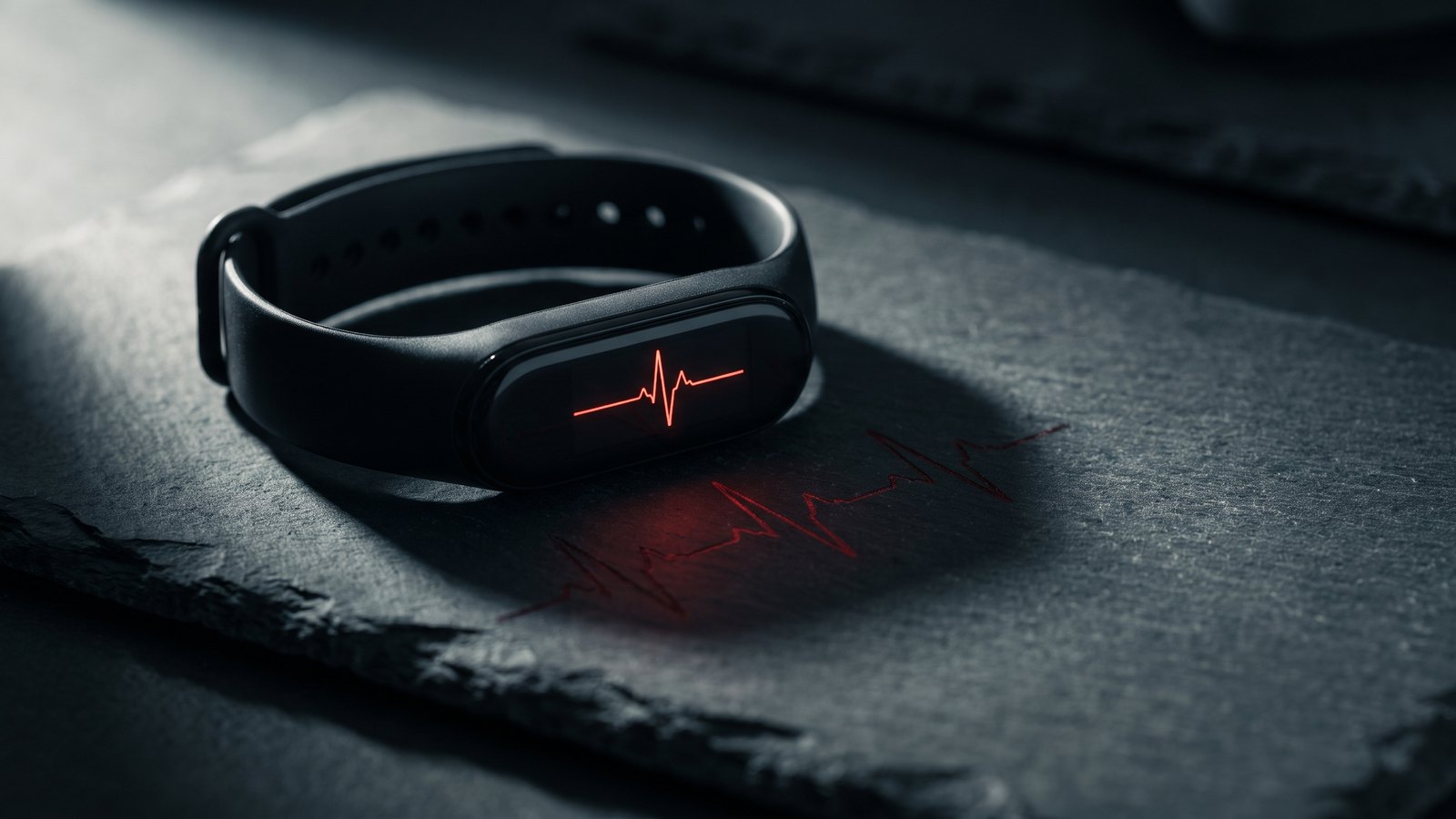
Ten years ago heart rate variability was a research measure. Now it is a number on your wrist that tells you, every morning, whether you are winning or losing. That is a big promotion for a metric most men have never had explained to them.
The short version: HRV is real, it tracks something that matters, and the way it is marketed oversells what a single morning reading can tell you. Used properly it is one of the better feedback tools a man can have. Used the way most people use it, it is a source of anxiety about a number that moves for reasons that have nothing to do with your health.
Here is what it measures, what the research supports, and how to read your own number without letting it run your week.
What HRV actually is
Your heart does not beat like a metronome. Even at a steady 60 beats per minute, the gap between beats is constantly changing by tens of milliseconds. Heart rate variability is the size of that fluctuation.
Those gaps are controlled by two branches of your nervous system pulling against each other. The sympathetic branch is the accelerator, the one that handles stress, training, caffeine, and deadlines. The parasympathetic branch, driven mostly by the vagus nerve, is the brake, the one that handles rest, digestion, and recovery. When the brake is well engaged, the beat-to-beat spacing varies a lot and HRV is high. When you are stressed, sick, hungover, or underslept, the accelerator dominates, the spacing gets more uniform, and HRV drops.
That is the whole idea. A higher number generally means your body is in a recovered state. A lower number means something is taxing it.
The measure most wearables report is RMSSD, the root mean square of successive differences between beats. It is the one that tracks vagal activity most directly, and it is the one you will see reported in milliseconds each morning. Some devices report SDNN instead, which captures more of the total variation over a longer window. They are not interchangeable, which is one reason comparing your number to your friend's is a waste of time.
The evidence that it matters
The reason anyone cares about HRV in the first place is population data. The Framingham Heart Study reprocessed ambulatory ECG recordings from 2,501 adults with no clinically apparent coronary heart disease or heart failure, average age 53, and followed them for about three and a half years. Nearly every HRV measure they looked at was associated with the risk of a new cardiac event after adjusting for age, sex, smoking, diabetes, and other risk factors. A one standard deviation drop in SDNN carried a hazard ratio of 1.47 (Tsuji et al., 1996).
That is a genuine finding and it is worth understanding what it is not. It is a population-level association, not a personal readout. It says that people with lower HRV, as a group, had more cardiac events over the follow-up. It does not say that your Tuesday reading of 38 means anything about your heart. Nobody has shown that pushing your morning number up adds years to your life.
The more useful framing for a healthy man is that HRV is a sensitive stress gauge. It responds fast to the things that load your system, and that responsiveness is where it earns its place.
What actually moves your number
Four things move HRV reliably, and men usually underestimate the first two.
Sleep. A 2025 meta-analysis pooled 11 randomized trials covering 549 participants and found that sleep deprivation significantly reduced RMSSD, while low frequency power and the LF/HF ratio rose. The pattern is sympathetic dominance and vagal suppression, which is exactly the signature you would expect (Zhang et al., 2025). A bad night shows up on your wrist the next morning.
Alcohol. This is the one that changes minds. Researchers analyzed continuous beat-to-beat recordings from 4,098 Finnish employees, comparing each person's own drinking days against their own non-drinking days. Alcohol suppressed nighttime recovery in a dose-dependent way, and the effect showed up even at low intakes. HRV-derived recovery during the first three hours of sleep fell by an average of 9.3 percent on low intake, 24.0 percent on moderate, and 39.2 percent on high. Being young or physically active did not protect against it (Pietila et al., 2018).
Two beers on a Wednesday costs you measurable recovery that night. Your ring will tell you so, and it is not wrong.
Training. Exercise raises resting HRV over time. A meta-analysis of 16 randomized controlled trials in 623 healthy adults found training improved RMSSD with a standardized mean difference of 0.84, along with SDNN and high frequency power (Amekran and El Hangouche, 2024). Note the direction of causation here. Fitness raises the baseline. A hard session temporarily lowers it the next morning, which is the tool working correctly, not a problem.
Age. HRV declines as you get older, and how much depends on which measure you use. In 260 healthy people aged 10 to 99, SDNN fell gradually to about 60 percent of second-decade values by the tenth decade, while RMSSD and pNN50, the vagal measures, dropped considerably faster (Umetani et al., 1998). A 50 year old comparing his number to a 25 year old's is comparing two different physiologies.
Can the wrist device even measure it
Reasonably, yes, at least for the core measure. Researchers compared smartphone photoplethysmography and a chest strap against ECG in 29 healthy people at rest, across both guided and normal breathing. For RMSSD, all differences from ECG were trivial and correlations were essentially perfect (Plews et al., 2017).
Two caveats worth holding onto. That validation was at rest, in a controlled setting, in healthy adults. Optical sensors on a moving wrist during the day are a harder problem than a still finger on a camera lens. And the proprietary "readiness" or "recovery" scores layered on top of the raw number are company algorithms, not validated measures. The RMSSD underneath is the part with published agreement data.
How to actually read your number
The single most important rule: your HRV is only comparable to your own HRV. Absolute values across people are close to meaningless. Two healthy men the same age can differ threefold, and neither is broken. Measure the same way, at the same time, ideally on waking, and watch your own trend.
Then ignore single days. Day-to-day readings bounce around for reasons that include a late meal, a warm bedroom, a full bladder, and how long you had been awake before the device took the reading. A rolling seven day average against your own baseline is the signal. One low morning is noise.
What a genuine multi-day drop usually means is simple and usually unwelcome: you are underslept, you are drinking more than you think, you are fighting something off, or life stress is running hot. Those are the four to check before you start rearranging your training.
Because the real use case is timing your hard work. Forty recreational runners were split between a traditional predefined program and one where the timing of hard sessions was decided each morning by HRV. The HRV-guided group did significantly fewer moderate and high intensity sessions, 13.2 against 17.7, and still improved 3,000 m running performance by 2.1 percent while the traditional group's 1.1 percent improvement did not reach significance (Vesterinen et al., 2016). Less hard training, at better-chosen moments, worked at least as well.
That is what the number is good for. Not a daily grade. A go or wait signal on the days you were planning to go hard.
Can you train it up
Partly. The biggest lever is the boring one: sleep more, drink less, and build aerobic fitness. That combination raises the baseline over months, and nothing else comes close.
Slow paced breathing is the one acute technique with a real literature behind it. A systematic review of 58 randomized controlled trials of HRV biofeedback, which is essentially structured slow breathing at around six breaths per minute with feedback, found a small to moderate effect favoring the intervention across outcomes, with the largest effects on anxiety, depression, anger, and athletic and artistic performance (Lehrer et al., 2020). It is free, it takes ten minutes, and the downside is nil.
What will not work is chasing the number directly. Optimizing a metric is not the same as improving the thing it measures, and men who start scoring themselves every morning often end up sleeping worse over it. If the number is making you anxious, that is a self-defeating loop, and the fix is to check it weekly instead of daily.
The verdict
HRV is one of the few consumer health metrics with real physiology and real published data underneath it. It responds honestly to sleep, alcohol, illness, and training load, and that makes it a good feedback tool for a man who wants to see the cost of his choices in something other than the mirror. A multi-week slide in your baseline is one of the earliest signals that you have earned a deload week rather than another hard one.
Use it as a trend against your own baseline, not a daily verdict and never a comparison against another man. Use it to decide when to push and when to back off. Do not treat it as a score to maximize, and do not read a health diagnosis into a Tuesday morning dip.
If your HRV has fallen off a cliff and stayed there for weeks, along with symptoms like breathlessness, chest discomfort, or a resting heart rate that will not come down, that is a conversation with a doctor, not a supplement or a new training block.
That is the verdict.
References
- Tsuji H, Larson MG, Venditti FJ Jr, et al. Impact of reduced heart rate variability on risk for cardiac events. The Framingham Heart Study. Circulation. 1996. https://pubmed.ncbi.nlm.nih.gov/8941112/
- Zhang S, Niu X, Ma J, Wei X, Zhang J, Du W. Effects of sleep deprivation on heart rate variability: a systematic review and meta-analysis. Front Neurol. 2025. https://pubmed.ncbi.nlm.nih.gov/40895095/
- Pietila J, Helander E, Korhonen I, Myllymaki T, Kujala UM, Lindholm H. Acute Effect of Alcohol Intake on Cardiovascular Autonomic Regulation During the First Hours of Sleep in a Large Real-World Sample of Finnish Employees: Observational Study. JMIR Ment Health. 2018. https://pubmed.ncbi.nlm.nih.gov/29549064/
- Amekran Y, El Hangouche AJ. Effects of Exercise Training on Heart Rate Variability in Healthy Adults: A Systematic Review and Meta-analysis of Randomized Controlled Trials. Cureus. 2024. https://pubmed.ncbi.nlm.nih.gov/39015867/
- Umetani K, Singer DH, McCraty R, Atkinson M. Twenty-four hour time domain heart rate variability and heart rate: relations to age and gender over nine decades. J Am Coll Cardiol. 1998. https://pubmed.ncbi.nlm.nih.gov/9502641/
- Plews DJ, Scott B, Altini M, Wood M, Kilding AE, Laursen PB. Comparison of Heart-Rate-Variability Recording With Smartphone Photoplethysmography, Polar H7 Chest Strap, and Electrocardiography. Int J Sports Physiol Perform. 2017. https://pubmed.ncbi.nlm.nih.gov/28290720/
- Vesterinen V, Nummela A, Heikura I, et al. Individual Endurance Training Prescription with Heart Rate Variability. Med Sci Sports Exerc. 2016. https://pubmed.ncbi.nlm.nih.gov/26909534/
- Lehrer P, Kaur K, Sharma A, et al. Heart Rate Variability Biofeedback Improves Emotional and Physical Health and Performance: A Systematic Review and Meta Analysis. Appl Psychophysiol Biofeedback. 2020. https://pubmed.ncbi.nlm.nih.gov/32385728/
Common questions
What is a good HRV number for a man my age?
There is no useful target, and that is the honest answer. Healthy men of the same age routinely differ threefold, and the measure your device reports, usually RMSSD, is not interchangeable with SDNN. HRV also declines with age, with the vagal measures like RMSSD dropping faster than SDNN across the decades (Umetani, 1998). Compare your number only to your own rolling baseline, measured the same way at the same time of day.
Why did my HRV drop overnight?
Check the four usual causes before anything else: short or broken sleep, alcohol, an illness coming on, and high life stress. Sleep deprivation significantly lowers RMSSD across pooled randomized trials (Zhang, 2025), and alcohol suppresses overnight recovery in a dose-dependent way even at low intakes (Pietila, 2018). A hard training session the day before will also drop it, which is the tool working correctly rather than a warning sign.
Are wrist and ring HRV readings accurate?
For the core measure, reasonably so. Smartphone photoplethysmography and a chest strap both showed trivial differences from ECG for RMSSD at rest in healthy adults, with near perfect correlations (Plews, 2017). Two caveats: that validation was done at rest in controlled conditions, and the proprietary readiness or recovery scores layered on top are company algorithms, not validated measures.
Can I actually raise my HRV?
Over months, yes, mostly through sleep, less alcohol, and aerobic fitness. Pooled randomized trials found exercise training improved RMSSD with a standardized mean difference of 0.84 (Amekran, 2024). Slow paced breathing is the one acute technique with real evidence: a review of 58 randomized trials of HRV biofeedback found a small to moderate benefit across outcomes (Lehrer, 2020). Chasing the number itself does nothing.
Should I skip my workout when HRV is low?
Do not skip your workout on one low HRV reading, which is usually noise. But timing hard sessions by HRV has real support. In 40 recreational runners, the HRV-guided group did 13.2 hard sessions against 17.7 in the traditional group and still improved 3,000 m performance by 2.1 percent (Vesterinen, 2016). Use a multi-day dip against your own baseline as a signal to swap intensity for easy work, not as a reason to skip training entirely.