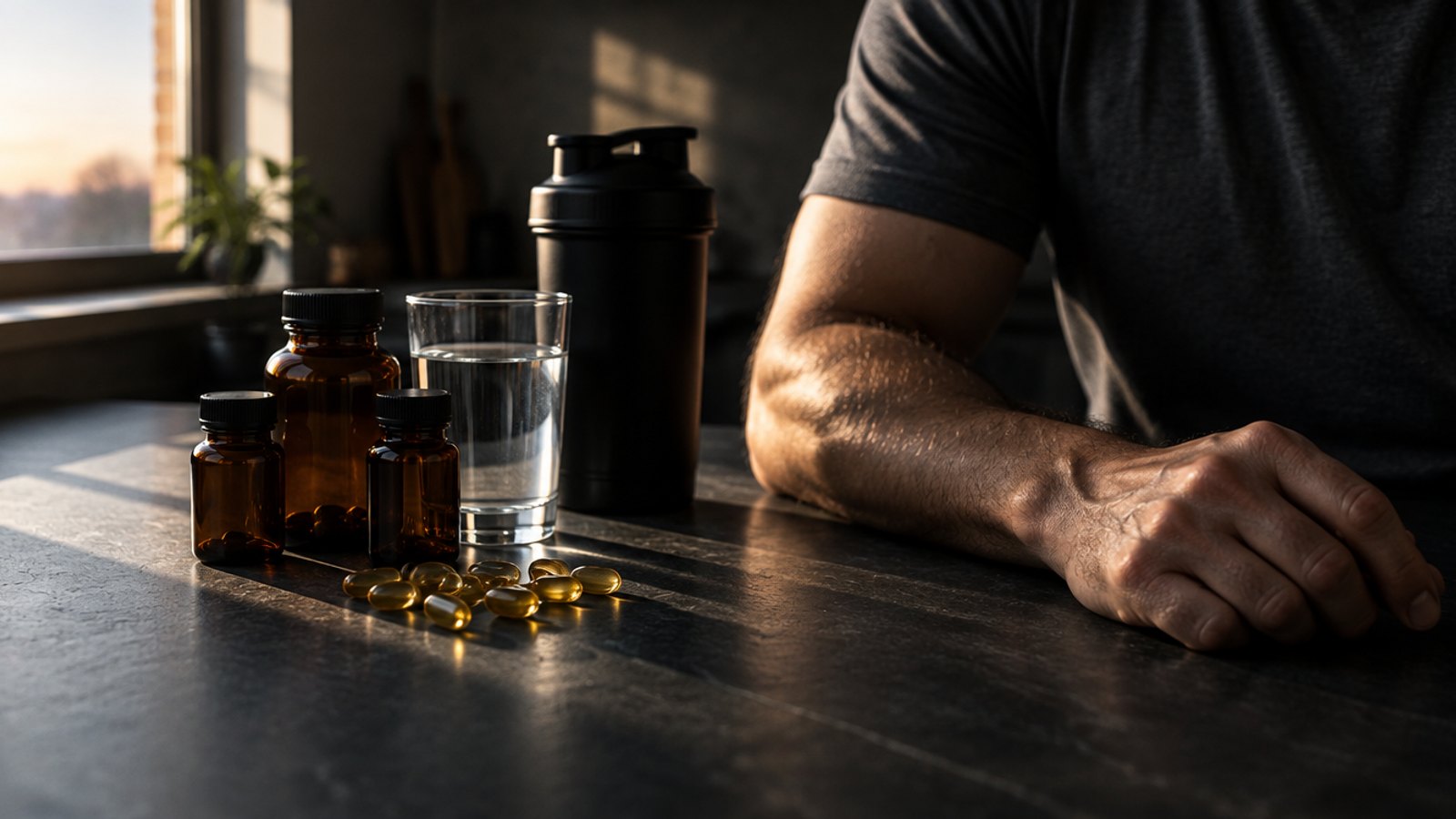
Supplements
Berberine: Real Blood Sugar Data, Terrible Nickname
It got called nature's Ozempic and the label stuck. The blood sugar data is real and worth knowing. The weight loss number is under two pounds, and the drug interaction is the part nobody sells.
Berberine got handed a nickname it never asked for. Somebody on the internet called it nature's Ozempic, the clip went everywhere, and now a plant alkaloid that has been studied for blood sugar since the 1980s is sold as a weight loss shortcut.
Here is the good news, and it is real. Berberine has more randomized human data behind it than almost anything else on the supplement shelf. It moves fasting glucose, it moves cholesterol, and it does it with a clean safety record across trials. That is a genuinely useful thing for a man watching his numbers creep the wrong way.
Here is the honest part. It is not a GLP-1 drug, it does not work like one, and the weight loss numbers are not close. This is education, not medical advice, and berberine is not a replacement for anything your doctor prescribed.
What berberine actually is
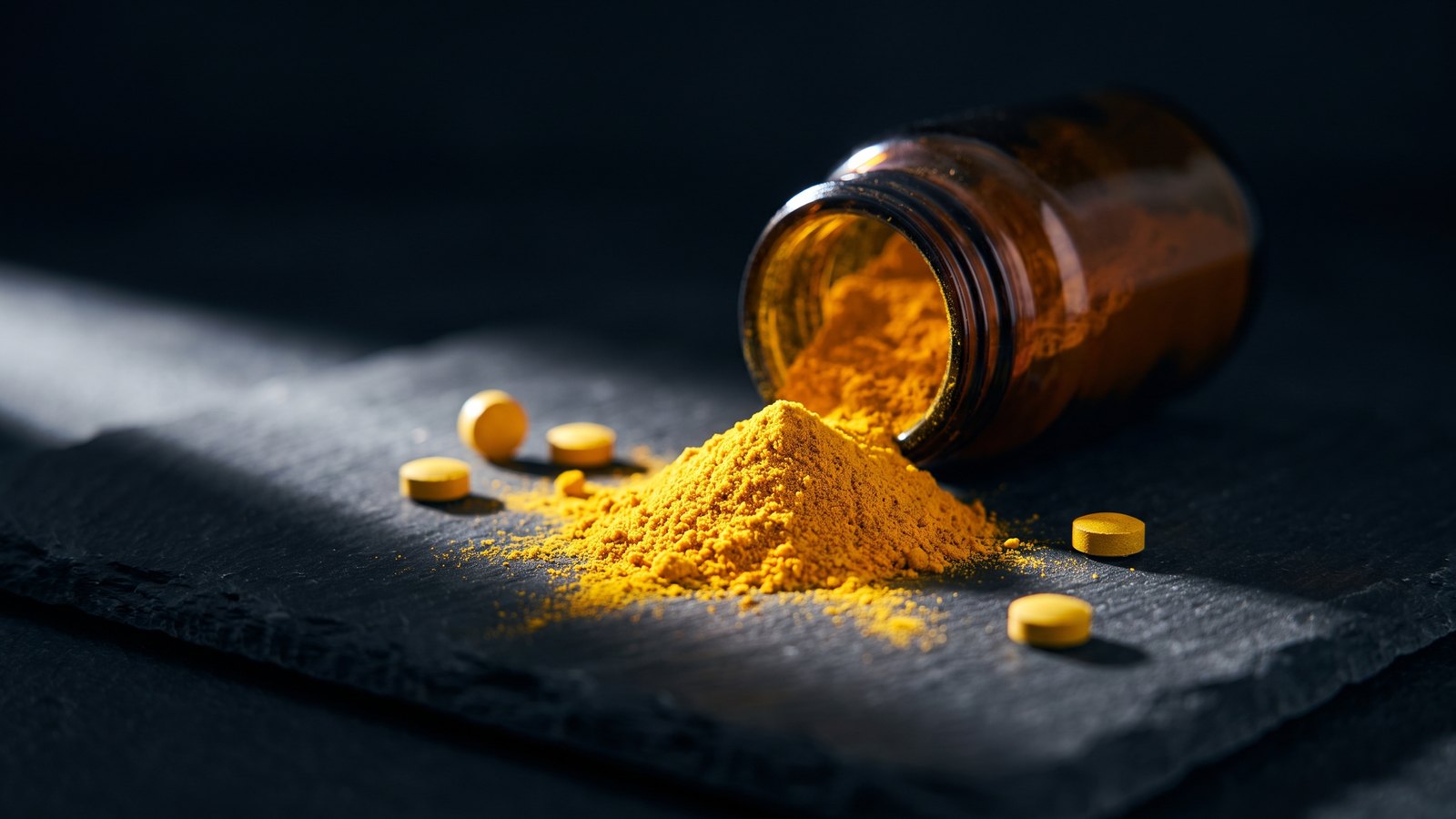
Berberine is a yellow alkaloid pulled from plants like goldenseal, barberry, and Chinese goldthread. Traditional Chinese medicine used it for gut problems for centuries. Modern researchers got interested when patients taking it for diarrhea showed up with lower blood sugar.
The main mechanism people point to is AMPK activation, the same cellular energy sensor that exercise and metformin lean on. That is where the metformin comparison comes from, and it is a fair starting point. It is not a claim that the two are interchangeable.
The blood sugar evidence is the strongest part
An umbrella meta-analysis, which is a study that pools other meta-analyses, looked at berberine across metabolic disorders. Fasting blood glucose dropped, HbA1c dropped by about 0.57 points, insulin fell, and HOMA-IR, the standard index of insulin resistance, came down meaningfully. Inflammatory markers including CRP, IL-6, and TNF-alpha dropped too (Nazari et al., 2024).
A 2025 systematic review focused on metabolic syndrome pooled placebo-controlled trials and found fasting plasma glucose down 0.515 mmol/L, triglycerides down 0.367 mmol/L, and waist circumference down 3.27 cm. Blood pressure did not budge, and neither did HDL (Liu et al., 2025).
Those are not enormous numbers, but they are consistent across a lot of trials, and consistency is rare in the supplement world.
The trial that started the metformin talk
Thirty-six adults with newly diagnosed type 2 diabetes were randomized to berberine or metformin at 500 mg three times a day for three months. The glucose lowering was similar between the two. In the berberine group HbA1c fell from 9.5 to 7.5 percent and fasting glucose fell from 10.6 to 6.9 mmol/L (Yin et al., 2008).
Read that carefully. This was a pilot study in 36 people with untreated, newly diagnosed diabetes and very high starting numbers. When you start that high, there is a lot of room to fall. It does not mean a healthy man with normal glucose will see anything like it.
The same paper reports the side effect worth knowing about. Twenty of the participants, 34.5 percent, had transient gastrointestinal problems. That is one in three. Liver and kidney function stayed normal.
The cholesterol data holds up too
Sixteen randomized trials covering 2,147 people were pooled for lipids. Total cholesterol fell 0.47 mmol/L, LDL fell 0.38 mmol/L, and triglycerides fell 0.28 mmol/L. Used on its own, berberine also nudged HDL up slightly. Adverse events were no different from control, and nothing severe was reported (Ju et al., 2018).
The authors flagged the catch themselves: the trials were clinically heterogeneous and the methodology in most of them was weak on blinding and allocation. The direction of the effect is believable. The exact size is soft.
Now the nickname
Twenty-three randomized trials were pooled specifically for body composition. Berberine reduced body weight by 0.88 kg, BMI by 0.48, and waist circumference by 1.32 cm. Waist-to-hip ratio did not change (Elahi Vahed et al., 2026).
Under two pounds. That is the honest number for berberine and weight.
For contrast, the trial that put semaglutide on the map ran 68 weeks and produced a mean body weight change of about 15 percent, against roughly 2 percent on placebo (Wilding et al., 2021). For a 220 pound man that is more than 30 pounds.
Two pounds against thirty. Berberine is not nature's Ozempic. It is a decent metabolic support ingredient wearing a headline that belongs to a different drug class, and the nickname is doing real damage to a supplement that would look better if people described it accurately.
The interaction nobody mentions
This is the part that matters most if you take any prescription.
Berberine inhibits CYP3A4, the liver enzyme that clears a large share of common medications, and it also acts on P-glycoprotein in the gut. That is not theoretical. In 52 kidney transplant patients taking cyclosporine, adding 200 mg of berberine three times a day pushed cyclosporine trough concentrations about 29 percent higher than in the group not taking it, and a pharmacokinetic substudy found the drug's AUC rose 34.5 percent (Wu et al., 2005).
Raising the blood level of another drug by a third is a big deal when that drug has a narrow safety window. Statins, blood thinners, immune suppressants, and several blood pressure medications run through the same pathway.
If you take anything prescribed, talk to your prescriber or pharmacist before you add berberine. This is not a hedge for the lawyers. It is the single most practical thing in this article.
If you decide to try it
Trials generally used 500 mg two or three times a day, taken with meals, for eight to twelve weeks or longer. Splitting the dose is standard because berberine clears fast and because taking 1,500 mg at once is a good way to end up in the bathroom.
Expect the gut to complain for the first week or two. Starting at one dose a day and working up usually takes the edge off.
Judge it on the right outcome. Get fasting glucose, HbA1c, and a lipid panel before you start, retest at twelve weeks, and look at those numbers instead of the scale. That is where berberine actually earns its keep.
And know who it is for. The trials that show the biggest effects enrolled people whose metabolic numbers were already off. If your fasting glucose is 85 and your LDL is fine, there is very little for this to fix.
The verdict
Berberine is one of the few supplements with a real randomized human record. It lowers fasting glucose, HbA1c, and LDL by amounts that are small but consistent, its safety profile in trials is clean, and it costs very little. If your metabolic markers are drifting and your doctor is fine with it, it is a reasonable eight to twelve week experiment.
It is not a weight loss drug. Under two pounds is the pooled answer, and no amount of nickname is going to change it. It also carries a genuine drug interaction that most people selling it never bring up.
Good supplement. Terrible nickname. Check with your prescriber first.
That is the verdict.
References
- Nazari A, Ghotbabadi ZR, Kazemi KS, et al. The Effect of Berberine Supplementation on Glycemic Control and Inflammatory Biomarkers in Metabolic Disorders: An Umbrella Meta-analysis of Randomized Controlled Trials. Clin Ther. 2024. https://pubmed.ncbi.nlm.nih.gov/38016844/
- Liu D, Zhao H, Zhang Y, Hu J, Xu H. Efficacy and safety of berberine on the components of metabolic syndrome: a systematic review and meta-analysis of randomized placebo-controlled trials. Front Pharmacol. 2025. https://pubmed.ncbi.nlm.nih.gov/40740996/
- Yin J, Xing H, Ye J. Efficacy of berberine in patients with type 2 diabetes mellitus. Metabolism. 2008. https://pubmed.ncbi.nlm.nih.gov/18442638/
- Ju J, Li J, Lin Q, Xu H. Efficacy and safety of berberine for dyslipidaemias: A systematic review and meta-analysis of randomized clinical trials. Phytomedicine. 2018. https://pubmed.ncbi.nlm.nih.gov/30466986/
- Elahi Vahed I, Shahir-Roudi E, Nojumi S, et al. The effect of berberine on obesity indices: a systematic review and meta-analysis. Int J Obes (Lond). 2026. https://pubmed.ncbi.nlm.nih.gov/41310257/
- Wilding JPH, Batterham RL, Calanna S, et al. Once-Weekly Semaglutide in Adults with Overweight or Obesity. N Engl J Med. 2021. https://pubmed.ncbi.nlm.nih.gov/33567185/
- Wu X, Li Q, Xin H, Yu A, Zhong M. Effects of berberine on the blood concentration of cyclosporin A in renal transplanted recipients: clinical and pharmacokinetic study. Eur J Clin Pharmacol. 2005. https://pubmed.ncbi.nlm.nih.gov/16133554/
Common questions
Does berberine actually lower blood sugar?
Berberine does lower blood sugar in pooled trials, and this is the strongest part of its record. An umbrella meta-analysis pooling other meta-analyses found berberine lowered fasting blood glucose, cut HbA1c by roughly 0.57 points, and improved HOMA-IR, the standard insulin resistance index (Nazari, 2024). A separate 2025 meta-analysis of placebo-controlled trials found fasting plasma glucose down 0.515 mmol/L and waist circumference down 3.27 cm (Liu, 2025). The effects are modest but they show up consistently, which is unusual for a supplement.
Is berberine really nature's Ozempic?
Berberine is not nature's Ozempic. Twenty-three randomized trials pooled for body composition found berberine reduced body weight by 0.88 kg, which is under two pounds (Elahi Vahed, 2026). The trial that made semaglutide famous produced a mean body weight change of about 15 percent over 68 weeks (Wilding, 2021). Berberine works through AMPK, not the GLP-1 pathway. It is a reasonable metabolic support ingredient carrying a nickname that belongs to a different drug class.
What dose of berberine do the studies use?
Most trials used 500 mg two or three times a day with meals, run for eight to twelve weeks or longer. The dose is split because berberine clears quickly and because taking it all at once makes stomach problems more likely. Starting with one dose a day and building up is the usual way to get through the first week.
What are the side effects of berberine?
Gut trouble is the common one. In the trial that compared berberine with metformin, 20 of the participants, 34.5 percent, had transient gastrointestinal effects, though liver and kidney function stayed normal (Yin, 2008). Across pooled trials the overall adverse event rate was no different from control and nothing severe was reported (Ju, 2018).
Does berberine interact with medications?
Berberine does interact with medications, and this is the most practical thing to know. Berberine inhibits CYP3A4 and acts on P-glycoprotein, the pathways that clear a large share of common prescriptions. In kidney transplant patients, adding 200 mg three times a day raised cyclosporine trough levels about 29 percent versus the group without it, with the drug's AUC up 34.5 percent (Wu, 2005). Statins, blood thinners, immune suppressants, and some blood pressure medications share those pathways. Talk to your prescriber or pharmacist before adding it.